
Image
Image Caption
A proposed move by British Columbia to suspend key provisions of its landmark Indigenous rights legislation has been put on hold following strong pushback from First Nations leaders. They warn, however, the broader dispute over rights, consultation and reconciliation is far from resolved.
The Government of B.C. confirmed April 20 it will not introduce legislation this spring to suspend or amend parts of the Declaration on the Rights of Indigenous Peoples Act (DRIPA), stepping back from a plan first outlined by Premier David Eby on April 2.
In a joint statement with the First Nations Leadership Council (FNLC), the province said both sides are committed to finding a path forward.
“The Government of B.C. will not be introducing legislation to suspend or amend DRIPA or UN Declaration-related provisions in the Interpretation Act in the spring legislative session,” the statement reads.
Passed unanimously in 2019, DRIPA aligns B.C. laws with the United Nations Declaration on the Rights of Indigenous Peoples (UNDRIP) and is widely seen as a cornerstone of reconciliation.
First Nations leaders say the proposed suspension marked a significant departure from the DRIPA commitment, raising concerns about government’s unilateral decision-making and a lack of meaningful consultation.
“When you do something like that, it is not meaningful consultation … You are certainly not getting our consent,” said Robert Phillips, a member of the First Nations Summit Task Group, in an interview with Windspeaker.com.
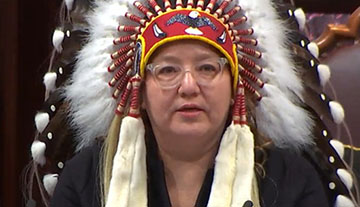
The issue has also drawn attention at the international level. National Chief of the Assembly of First Nations Cindy Woodhouse Nepinak said the proposed suspension raised broader human rights concerns and she was putting it before the United Nations Permanent Forum on Indigenous Issues, which concludes May 1 at UN Headquarters in New York.
“The inherent pre-existing rights of First Nations are part of, and are protected by, international human rights law. They cannot be suspended, amended, or paused,” she said.
Phillips said First Nations are “very frustrated, even angry with the premier.”
The premier cited a court ruling for prompting his decision to suspend some DRIPA provisions. The December 2025 ruling by the B.C. Court of Appeal found in favour of the Gitxaała Nation assertions that the province did not properly consult with First Nations and affirmed that DRIPA carries legal weight.
In a letter to First Nations leaders on April 8, Eby said the ruling could lead to a wave of legal challenges and create what he described as “an untenable degree of legal uncertainty.”
First Nations leaders say the issue goes beyond legal risk and centres on what a suspension of DRIPA would mean for communities and the protections they rely on in their day-to-day governance.
“Suspension is a wolf in sheep’s clothing. It is presented as a compromise, but achieves the same goal of gutting the Declaration Act in the short term, while the (governing) NDP pursues an appeal to undermine it in the long term. B.C. First Nations know this is a false offer and we cannot accept it,” said Phillips.
He said a pause would halt progress on implementing Indigenous rights protections tied to land use and resource development.
“Within a pause, we don’t have the mechanisms, the framework, or the tools to implement Aboriginal title,” Phillips explained. “We can’t put our Aboriginal rights and title on pause. We can’t put UNDRIP on pause …”
Phillips pushed back on what he described as growing misinformation surrounding the debate, saying some public commentary has exaggerated the impact of Indigenous rights on property, development, and the broader economy, including claims homeowners could lose property or see declining land values — assertions he said are not supported by existing agreements or real-world examples.
“People are just trying to make (the public) fearful,” he said.
Phillips said DRIPA is meant to clarify decision-making around consultation and consent, not disrupt existing rights or halt development, adding that framing it as a threat risks undermining informed discussion as governments and First Nations work to implement those rights.
For many Nations, those protections shape how governments engage before approving projects affecting their territories. Leaders say suspending them would create a gap in accountability at a time when courts are affirming stronger obligations, a concern echoed by Stewart Phillip, grand chief and president of the Union of B.C. Indian Chiefs, who called the proposal a fundamental threat to the legislation.
“The Declaration Act is sacrosanct, and I reject this dangerous, unilateral suspension or amendment proposal,” he said.
The proposal also exposed divisions within the provincial government.
According to CBC News, more than 10 NDP MLAs raised concerns this April, while Vancouver-Strathcona MLA Joan Phillip, a member of the Tsleil-Waututh Nation who is married to Stewart Phillip, said she could not support the legislation.
Instead, the province and the FNLC agreed to a six-month engagement period to address legal concerns while maintaining commitments to Indigenous rights.
“The government and FNLC are committed to working together with all First Nations leaders on a path forward to discuss and consider the government’s stated legal concerns, while upholding the title and rights and human rights of First Nations,” the joint statement reads.
For some leaders, the shift represents an opportunity to reset the process — particularly for Nations with established governance frameworks.
John Jack, an elected councillor with the Huu-ay-aht First Nations who attended early discussions with the province, said his Nation’s modern treaty provides a level of legal certainty that shapes how it views the situation differently.
“I think if I were to characterize how I would be in regards to moving forward with those amendments, I would be content. I wouldn't be happy, but I wouldn't be unhappy as well,” he said in comments to CBC News. “I think it provides enough time for us to do the right things on all sides.”
Many First Nations leaders, however, maintain a firm opposition and point to a breakdown in trust at the heart of the dispute.

“Premier Eby has broken the trust that Premier Horgan and First Nations worked hard to build,” said Terry Teegee, regional chief of the British Columbia Assembly of First Nations.
DRIPA was co-developed with First Nations and is widely seen as the foundation for a new relationship based on collaboration. Leaders say the proposed suspension marked a step away from that approach.
Some saw the government’s decision to step back from introducing suspension legislation this spring as an opportunity to stabilize those relationships. In a statement, the Nuu-chah-nulth Tribal Council (NTC) leadership said the agreement helped prevent a deeper breakdown.
“I am happy that we can be putting our energies towards achieving good work and not fighting with B.C. There are good initiatives happening in the province that can now be accomplished under the same path we set seven years ago,” said Judith Sayers, president of the NTC.
In a recent opinion column, former B.C. Green Party MLA and Tsartlip First Nation member Adam Olsen argued that current concerns about “legal uncertainty” reflect long-standing provincial approaches to Indigenous land rights. He linked the current debate to the legacy of colonial official Joseph Trutch, whose policies denied First Nations title and reduced land reserves — decisions that continue to shape a province where most land remains without treaty agreements.
While the province stepped back from introducing legislation this spring, it has not abandoned its underlying concerns tied to the Gitxaała ruling and its potential legal implications.
While both sides have agreed to the engagement period ahead of the fall legislative session, First Nations leaders say progress will depend on whether the province returns to a collaborative approach grounded in consultation and co-development.
Without that shift, leaders warn the dispute could deepen, affecting how Indigenous rights are implemented in B.C.
“We’re deeply frustrated and angry about what’s happening here,” said Phillips, underscoring the stakes as both sides prepare for the next phase of negotiations. “For more than 150 years, we’ve seen the impacts of colonization. We don’t want to see that continue.”