
Image
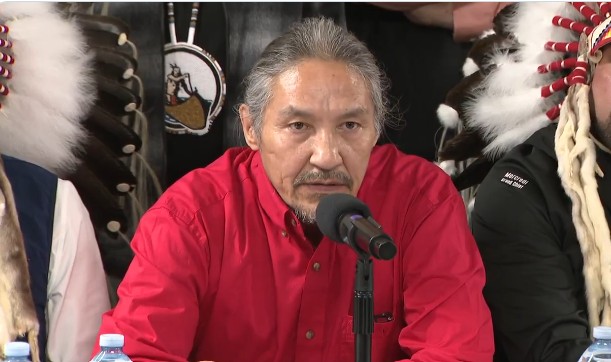
Image Caption
The Alberta separatist movement was called crazy, laughable, and a political fantasy by chiefs gathered in Edmonton Jan. 29 to, again, voice their concerns about an independence agenda that threatens constitutionally protected treaties with the Crown.
The chiefs condemned, again, the United Conservative Party (UCP) government, which they say has enabled the separatists with amendments to provincial legislation that allow unconstitutional citizen-led petitions. This has led to a petition and the gathering of signatures to prompt a vote on the referendum question: "Do you agree that the province of Alberta shall become a sovereign country and cease to be a province in Canada?" Approximately 178,000 signatures are required for a vote on the question to be considered.
The chiefs also denounced separatists for having a reported three meetings with agents of the United States government about peeling Alberta off from Canada, saying the meetings represented foreign interference in this country’s political affairs. The reports also say separatists will ask the U.S. for $500 billion to finance Alberta’s independence.
United States Treasury Secretary Scott Bessant has used the separatist agenda as a stick to poke Canada.
“I think we should let them come down into the U.S.,” Bessant said about Alberta. “They want what the U.S. has got.” Bessant cited the natural resources within provincial boundaries, including oil, and the lack of a new pipeline plan to take the oil to tidewater on the west coast.
The Alberta chiefs are not impressed with developments.
“Resign, immediately,” was the message delivered to Alberta Premier Danielle Smith and her UCP government by Athabasca Chipewyan First Nation Chief Allan Adam, who was flanked at the press conference by chiefs from Treaties 6, 7 and 8.
First Nation leaders called on Albertans to oppose the petition for a vote on Alberta independence and any effort to make Alberta the 51st American state.
“From here on forward the road is going to get rocky and rough,” Adam told Smith through the media. He said he hoped the premier has her bags packed, “because when this referendum is defeated, I will gladly walk you to the border.”
Any motion to secede cannot proceed without prior consent from First Nations, reads a release handed out at the chiefs’ press conference.
“By allowing this separatist petition, the UCP are acting contrary to the law, and we are asking the courts to rule on the illegality of this Treaty violation and this unconstitutional piece of political theatre,” reads Sturgeon Lake Cree Nation (SLCN) Chief Sheldon Sunshine’s comment.
In a statement of claim filed by SLCN on Jan. 5, the nation asserts that through the passage of Bill 14, the Justice Statutes Amendment Act, which amends the Citizen Initiative Act and the Referendum Act, the government of Alberta has “knowingly and recklessly proceeded… to delegate the power to decide what happens on Treaty land to a group of private citizens.” The claim also asserts that the process “breaches Treaty and will enable foreign interference from the most powerful Nation to the south, the United States of America, already stating its intention to annex this Treaty land, Canada.”
Under international and Canadian Law, neither Alberta nor Albertans have the right to secede, unilaterally or otherwise, reads the statement.
Furthermore, the statement continues, the Treaties were agreed to by First Nations and the Crown before Alberta was created—Alberta is not a Party to the Treaty and cannot make changes without First Nations’ consent.
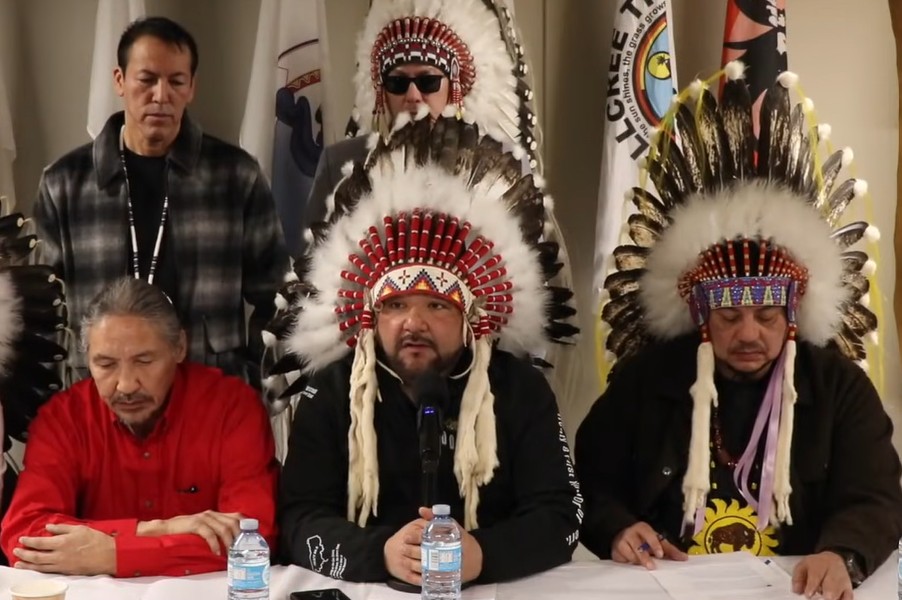
In an interview with Windspeaker after the press conference, Trevor Mercredi, grand chief of Treaty 8, said it was “a disgrace to even have the thought of separation in Alberta.”
Others have called it treasonous, including British Columbia Premier David Eby.
“I read an article last night in the Financial Times about a group of people from Alberta, I won’t describe them as Albertans, who went to the White House seeking the assistance of the United States to break up our country… To go to a foreign country and to ask for assistance in breaking up Canada, there’s an old-fashioned word for that, and that word is treason. It is completely inappropriate to seek to weaken Canada…” He said Canada needs to draw a line. Eby was speaking to the press after meetings with other premiers, including one with Premier Smith where they spoke about the pipeline issue.
Former New Brunswick premier Brian Gallant lumped Premier Smith into the effort to speak with the Americans about the independence agenda, citing her many trips to Washington and Mar-a-Lago, the Trump golf course in Florida where U.S. President Donald Trump hosts business leaders and politicians.
“It is shocking,” said Gallant. He called on Smith to condemn the separatists’ U.S. meetings. He warned against messing with separation referendums, likening the Alberta movement to the 2016 Brexit vote that led the United Kingdom to leave the European Union, resulting in severe economic disruption in the region.
During the press conference the chiefs discussed the resources that successionists believe they would be entitled to retain after independence. Chiefs argued against the notion.
On a Windspeaker question about the years-long First Nations’ call for Canada to rescind the Natural Resources Transfer Agreements, Chief Samuel Crowfoot of Siksika First Naton said that, in the event of succession, “The natural resources should come back under the authority and jurisdiction of First Nations. That’s where it resided originally and that’s where it needs to be. That resources act is unconstitutional… We would no longer honour that arrangement with a new man on the block when we’re not happy with the situation as it is right now.”
Chief Sunshine agreed. “All the resources should return back to the rightful owners, and that’s First Nations all across this land. The Natural Resources Transfer Act was enacted in 1930. That was at a time that First Nations weren’t allowed to hire legal to fight this. The times are changing. The days of that are long gone.”
Chief Mercredi said “The land still belongs to us. The jurisdiction still belongs to us, regardless of who thinks they own it, whether the separatists think they own it, whether the province thinks they own it. Even if the federal government thought they owned it… The rights of our people is the ownership of our lands, the jurisdiction of the land. We’ve never given that up. It was never on the table.”
He said “If the separatists break the Confederation pact there is no treaty in Alberta.” He said Alberta exists because of treaties.
“The separatists know that treaty is important, yet they want to push it aside to fit their narrative and that’s something that we can’t have.”
Separatists have also argued that a successor state would automatically assume the treaty arrangement and its obligations.
“I think what you’ve seen with the Supreme Court of Canada decisions on Quebec separation that there is no unilateral change that they can accomplish. It’s going to go through a whole process. We’ve seen the challenges that they are going to face once that referendum comes, and if it does pass,” said Chief Sunshine, who added “I don’t believe it will pass.”