
Image
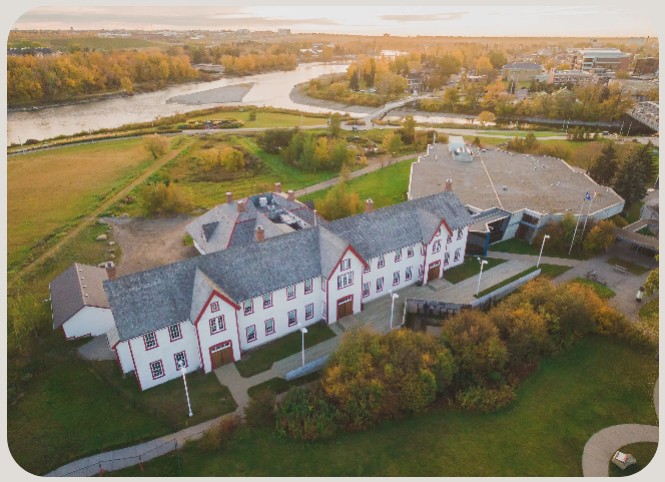
Image Caption
Local Journalism Initiative Reporter
Windspeaker.com
A Calgary facility that showcases Indigenous history is getting a major facelift.
The Confluence Historic Site & Parkland will create three new permanent galleries with almost $350,000 in funding from the Tourism Growth Program offered through Prairies Economic Development Canada (PrairiesCan).
PrairiesCan officials recently announced it had awarded more than $1.9 million to eight projects to boost tourism experiences in Alberta.
The Confluence opened its Blackfoot gallery in May 2025. With the latest funding, facility officials will work to create galleries dedicated to Tsuut’ina Nation, Stoney Nakoda Nation and the Métis Nation of Alberta.
“We just finished all of our engagement with the Indigenous communities,” said Lindsie Bruns, director of creative experience.
When it first opened in 1978 The Confluence was called the Fort Calgary Interpretive Centre. It’s located at the place where two rivers, flowing in different directions, meet.
“Every day, the Bow and Elbow rivers that converge here remind us of this truth: different perspectives can co-exist and flow together,” reads The Confluence’s website.
“We're working on the exhibit design right now,” said Bruns. “And then it will be fabricated and built over the next few months… It should be open in 2027.”
The engagement process was extensive.
“We've been working steadily, doing lots of different interviews and group sessions, one-on-one sessions, until the end of March of this year,” Bruns said. “We were able to engage about 80 people from those three Nations.”
Bruns said the engagement process, begun last August, was vital.
“The first step of our process, which was the same with the Blackfoot, was to do a lot of engagement with Elders and knowledge keepers to find out what they wanted to showcase in each of their exhibits,” she said.
“The final design is not done yet, so I can't tell you exactly what it will have. But it will be a mixture of art and commissioned pieces to represent each of those Nations,” said Bruns.
“And all of the objects in all of the exhibits will be made by artisans and craftspeople from those Nations. So, it's contemporary art that's made in a traditional way. We did that because we wanted to be able to say who made it, where it came from and be able to compensate them fairly and credit them.”
Bruns said officials at The Confluence were keen to change the look of the facility.
“We had the same exhibits for the past 25 to 30 years,” she said. “So, it was time to do a big update for the permanent exhibits and we started that process about three years ago. We wanted to be able to showcase more of the Indigenous history of this site because it's a really important site in southern Alberta.”
Besides creating three new galleries, some other work will take place simultaneously.
“There will be a section that talks about Fort Calgary and the North-West Mounted Police, as well as the early settlement of Calgary,” Bruns said. “And in that section, we will be highlighting other communities that came later to Calgary, such as the Chinese community and the Black community. And then in the future, we hope to add lots more different cultures as well.”
Bruns is thrilled that PrairiesCan is doing its best to help tourism throughout the province, and especially at The Confluence.
“This grant helped us immensely,” she said. “It's really hard to get funding for things like honoraria and artist fees because often funding is restricted to capital spending. We were very happy to get this particular grant because we were able to pay for things like engagement and exhibit design work, architectural drawings, project management. Those are things that are typically harder to get funding for.”
Bruns said The Confluence is a significant building in the city.
“There's nowhere else in Calgary right now that is showcasing all the history of the Indigenous people in this way,” she said. “So, we're really excited to see more of that type of programming and exhibits. It's really important for us to reflect the people of Treaty 7.
“This is for them, as well as tourists coming from out of town and across the world. But we want to make sure that the Indigenous people of Treaty 7 really feel welcome here and want to come here and see their history and culture shown in a good way.”
Bruns said visitor numbers have increased dramatically since the installation of the Blackfoot gallery.
“Since we opened the Blackfoot gallery, which was almost a year ago, we've had over 14,000 people visit the site just for that,” she said.
And then on top of that, about 10,000 students, mostly in Grades 1 to 6, visited the centre on field trips.
“We've been hearing from teachers and students that they want this type of knowledge to be shared,” Bruns said. “They want somewhere to go to learn about Indigenous history. We're really excited that we're able to offer new exhibits to help support education.”
More information about The Confluence is available at https://www.theconfluence.ca/