
Image
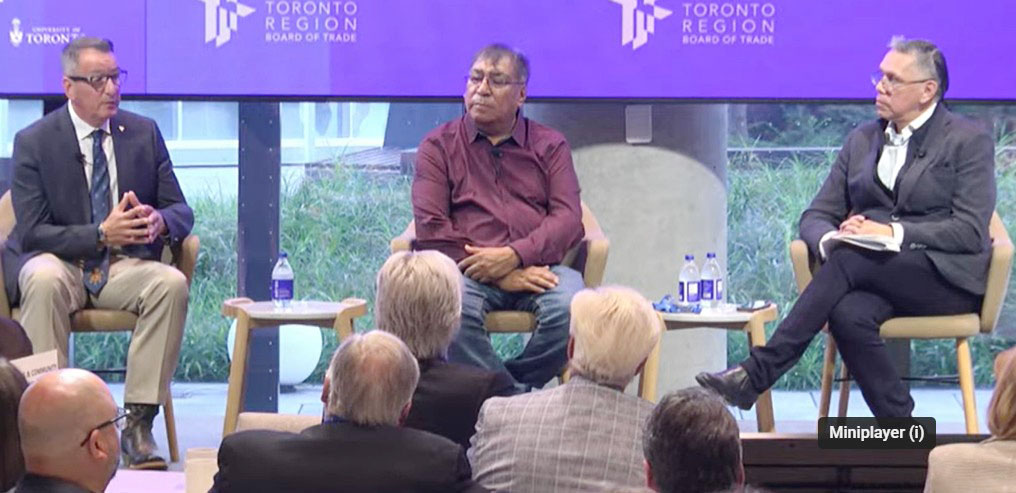
Image Caption
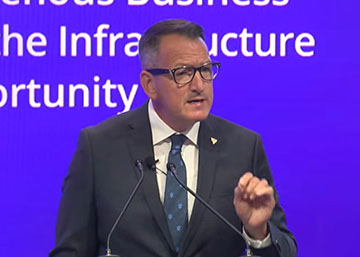
Ontario Minister Greg Rickford announced on Sept. 10 a $61.8 million investment to begin construction of the “corridor to prosperity”, road access to the Ring of Fire.
The Minister of Indigenous Affairs and First Nations Economic Reconciliation and Minister Responsible for Ring of Fire Economic and Community Partnerships was speaking at the Building Together: Indigenous Business and the Infrastructure Opportunity Conference in Toronto.
Ontario’s multi-million dollar investment will build the Main Street Rehabilitation Project in a little town called Geraldton in the Municipality of Greenstone in northern Ontario. The minister described Geraldton as the gateway of the corridor. Shovels will be in the ground by fall, he said.
It’s “legacy infrastructure” to one of Ontario’s greatest assets, Rickford said. The Ring of Fire region contains valuable critical minerals that will be sold to the world. It’s a region that is 5,000 sq. km. in size in the James Bay lowlands about 500 km northeast of Thunder Bay.
Identified 18 years ago, gaining access to those minerals in the Ring of Fire has been difficult. Rickford said data bases that he’s reviewed on other projects to mine gold in Ontario showed that each was bogged down in process and regulatory requirements, including at the First Nations level. He said each community could have as many as 80 different processes, including duty to consult obligations required to be completed by different levels of government.
“We’re talking about communities with populations of anywhere from a hundred to 1,500 or 2,000 people and serious capacity issues.”
So, the province reset its approach, Rickford said. “We worked with First Nations communities, and each one of those projects…. went from a conceptual piece on a bookshelf to construction and now actively producing 300- to 400-thousand ounces of gold a year.”
He said Ontario now knows how to get the processes right.
“Move at the speed of business. Get efficiencies that don’t compromise environmental integrity and interest that we all have. And ensure that we have the kind of legacy infrastructure to support it.”
Making investments in such legacy infrastructure would not only serve the province in getting access to the critical minerals, it would serve communities, including First Nations, said Rickford. The “corridor to prosperity” provides the opportunity for more efficient broadband, improved water and wastewater systems, and will bring clean energy to First Nations allowing electrification in some of the last communities in the province still on diesel generation, he said.
Developing all-season, dependable road access, he said, is essential. The seasonal roads used to transport goods, supplies and services to First Nations have gone from being usable four to six weeks each winter to as little as a couple of weeks because of climate change.
“This isn’t just about building a mine,” said the minister. It’s about “making sure that those First Nations have access to the kind of modern infrastructure that, quite frankly, we take for granted.”
The minister said First Nations in proximity to the corridor, roughly the distance between Toronto and Montreal when complete, will benefit every step of the way with jobs, infrastructure and equity buy-in.
The Geraldton Main Street project will be the first segment on the road network to the Ring of Fire. It is a five-kilometre stretch of road that currently cannot handle the kind of commercial, industrial and personal travel required for mining operations to be developed further to the north. The project will connect Highway 11 at the south end to Highway 584 at the north, ultimately connecting with the Trans-Canada Highway.
The corridor that leads into Geraldton is where the First Nations owned Migizi Plaza is being developed. It will be a large service area for commodities and commercial services. It will have the capacity for large machinery to stage there, said the minister.
The plaza will ensure that the corridor, at its start, will have the right kind of “business feel to it”, led in partnership with First Nations.
After the corridor build announcement, joining the minister for what was dubbed a “fireside chat” was Webequie First Nation Chief Cornelius Wabasse. The minister said they were scheduled to meet that day with Ontario Premier Doug Ford to discuss projects the First Nation needed to complete a secondary offshoot of the corridor at the north end, called the Webequie Supply Road , and critical infrastructure like a multi-use facility for that community.
Key among the discussions with Ford will be capacity building and training to mobilize the Webequie population for the kind of work needed in the area, like Red Seal Heavy Machinery education so First Nation populations will be able to work on construction and be employed in the mines.
Chief Wabasse said he took instruction from his Elders and his community to continue to work with industry and government to allow his First Nation to flourish and prosper. The mining industry is part of the opportunities before them, he said.
To view the entire speech and chat go to https://www.youtube.com/live/sdGKbC7UvwU?si=EDHwJchJvmM2BxYR