
Image
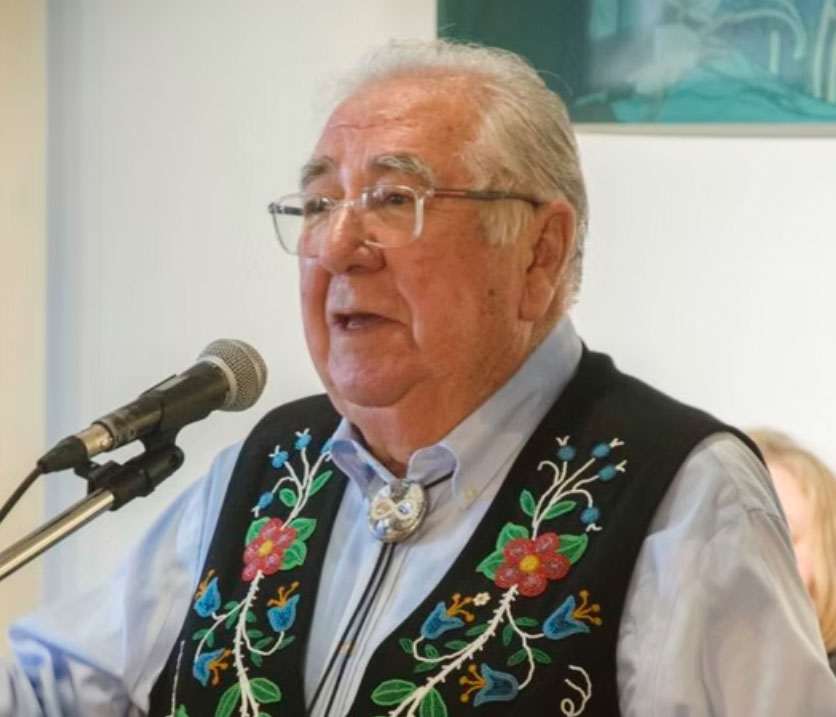
Image Caption
Local Journalism Initiative Reporter
Windspeaker.com
Based on the successes of last year's inaugural event, an eastern Ontario festival organized by a leading Indigenous activist has grown considerably for its second running.
The three-day festival, called Reconciliation Through Art, will begin on Sept. 28 in Almonte. It coincides with the National Day for Truth and Reconciliation on Sept. 30.
The event is organized by Métis Elder Tony Belcourt, who has been living in Almonte the past 14 years. Belcourt is the founding president of the Native Council of Canada, established in 1971.
Reconciliation Through Art will bring together Indigenous artists, performers and educators. Festival programming includes art, music, food and cultural teachings.
"We're really building on a huge success and a lot of wins from last year," Belcourt said. "We had over 1,000 people come to our exhibit last year. It was amazing."
The 2024 festival was all jammed into one day.
"It was pretty busy," he said. "We're doing it over three days this year. It will make it a lot easier for us and for the people that are coming."
Belcourt said many local residents of the small town and surrounding communities are expected to attend again.
"But we have a lot of people coming from Ottawa as well," he said of the nation's capital, located about 50 kilometres away. "It's the kind of thing that draws our own people obviously. But we have a very healthy crowd of non-Indigenous people, particularly in these townships around here."
Belcourt said many area residents are supportive in other ways, too.
"We've had a lot of support of Indigenous peoples, our issues and also the whole notion of reconciliation," he said. "It begins with learning, about who we are, what the issues are."
Belcourt said many people were shocked with the 2021 revelations that came out about unmarked graves at the former Kamloops Indian residential school.
"It really heightened the peoples' interests," he said. "Nothing heightens peoples' interest more than learning about the deaths of children."
Belcourt said that piqued curiosity about Indigenous people.
"They want to know about our history, our culture, our ways of being," he said.
Belcourt believes the Almonte festival can play its part towards reconciliation.
"There's no doubt in my mind this has a major benefit to our goals of reconciliation," he said. "Last year and this year we are featuring films about the Indian residential schools situation."
And this is generating more awareness.
"This is touching peoples' hearts and they want to make sure that the governments are going to do the right thing," Belcourt said.
The festival will also include a water walk.
"There's a lot of interest in that," Belcourt said. "People are interested in our way of being, in our ceremony, in our spirituality. It helps to break down the barrier wanting to engage with Indigenous people when you do things like that because people who don't know about us and our ceremonies, they're often afraid or uneasy in coming to our events."
Performers will also be doing their bit.
"Our artists tell stories," Belcourt said. "There's a lot of stories and our visual artists are telling stories about our places, our people, our ways," he said. "And our singers, songwriters are telling their stories as well. People are interested, genuinely interested, and this is a great opportunity for them to find out, to be there rubbing shoulders with us."
Jason Baerg, an associate professor of Indigenous practices at Toronto's OCAD University, will be one of the artists displaying his work at the festival.
"We're really there to support Indigenous love and joy and futurities," he said. "And so we're there to celebrate the continuum but also to recognize that truth and reconciliation is really vital and important. I'm going to be there to honour all of those things."
Baerg will also attend a truth and reconciliation event at OCAD's graduate gallery in Toronto on Oct. 1.
"We can't get together enough," he said. "As community, especially in 2025, we're all really busy, so I think about the quality of our relationships. And the more that we can connect and support each other, and engage with settlers as well to encourage best relations, I think that's really important."
Belcourt is hoping the Almonte festival continues to grow in his community.
“It's a lot of hard work,” he said. “We have a great team of volunteers to pull it off. And they're just so excited about it. Right off the bat they wanted to do it again. And they're already talking about 2026. And we haven't even started (this year's event).”
More information on Reconciliation Through Art is available at www.reconciliationthroughart.ca