
Image
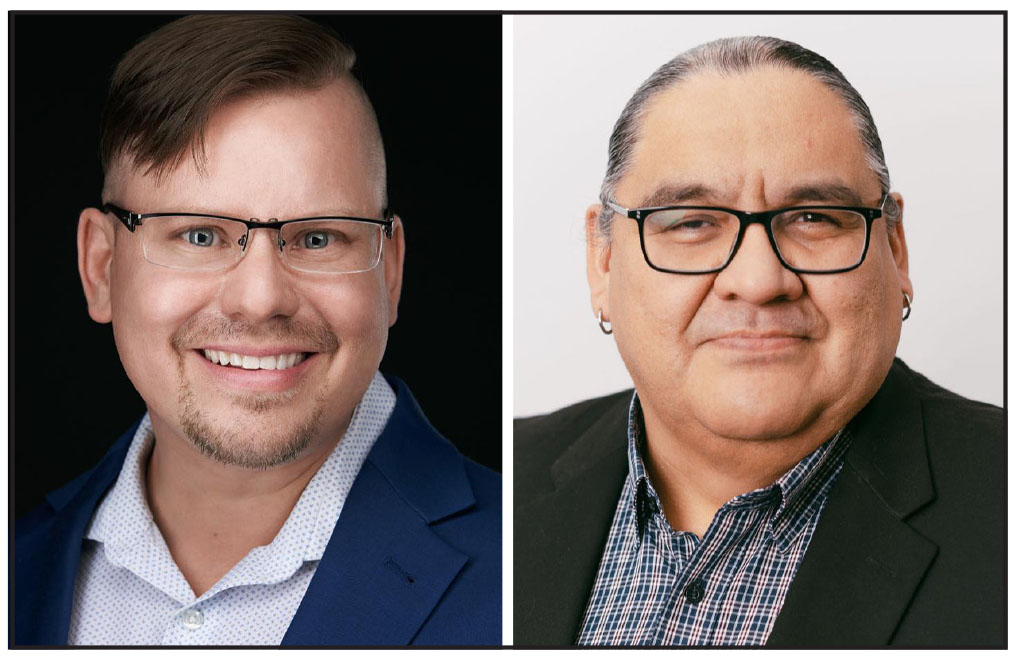
Image Caption
Local Journalism Initiative Reporter
Windspeaker.com
As Ontario advances a feasibility study into a proposed East–West energy corridor, two Alberta-based Indigenous leaders with experience in established energy partnerships say the discussion should focus less on whether Indigenous Nations should be involved and more on how, arguing that ownership-based partnerships, if built on trust and strong safeguards, can support long-term Indigenous sovereignty.
Justin Bourque, vice-president with Athabasca Indigenous Investments and a consultant who helps structure Indigenous equity positions in major resource projects, said existing partnerships in Alberta provide a useful analogue for how Indigenous communities could approach future projects.
Bourque has worked on transactions involving Indigenous ownership in major energy assets with Enbridge, Suncor Energy, Tamarack Valley Energy and Wolf Midstream. He said those experiences demonstrate what’s possible when Nations participate as equity partners.
“I think that, from an economic perspective, more of these equity ownership partnerships that Indigenous groups can take really ties into unlocking economic sovereignty for those Nations,” he said. “It becomes unencumbered cash flows for the communities (to) develop how they see fit.”
Bourque pointed to Alberta-based partnerships involving several existing, revenue-generating infrastructure projects: the Athabasca Trunkline, Northern Courier Pipeline, Clearwater Midstream Assets, and the Access Natural Gas Liquids (NGL) Transportation System. He said the projects have generated stable, long-term revenue, with some proceeds used to fund major community infrastructure that supports community well-being.
“One example that I can point to would be Whitefish (Goodfish) Lake First Nation,” Bourque said. “They have taken their investment and participated in two equity ownership transactions. They’ve been able to finance a community recreational centre, hockey rink, and sports complex … to give the youth an opportunity to … thrive and develop through sport.”
Bourque said he has not been involved in Ontario’s proposed East–West corridor, but said that new projects are more complex than investing in existing assets and require Indigenous involvement from the outset.
He said participation must go beyond financial investment, and communities need to be involved throughout feasibility work, environmental assessments, and consultation.
A critical component of those partnerships, he added, is trust.
“It’s been said many times that partnerships only move at the speed of trust, and when you’re starting with a lack of trust, it’s important that both sides really take time and work to build that trust together.”
Stephen Buffalo, president and CEO of the Indian Resource Council and chair of the Alberta Indigenous Opportunities Corporation, said, “For many years, we’ve been misguided and misrepresented. Trust is a big angle to make sure that everyone is going to be not only protecting the environment (but also) getting a fair, equitable piece of the project.”
Those considerations resurfaced after Ontario launched a feasibility study on Oct. 30 titled Ontario Launches Feasibility Study to Build East-West Pipeline and Energy Corridor, examining whether a new energy corridor could carry Western Canadian oil and gas across Ontario, with potential outlets including a proposed port on James Bay, Ont.
While no details have been approved, the announcement has renewed discussion about what Indigenous involvement should look like.
Some Indigenous leaders have raised concerns about how the study was introduced. Jason Rasevych, president of the Anishnawbe Business Professional Association and a Ginoogaming First Nation member, said several Northern Ontario Nations first learned of the feasibility study through media reports rather than consultation, a development he described as a warning sign.
“There was no prior engagement, no discussion, and no partnership,” Rasevych said in an earlier interview. “This isn’t consultation; it is lip service ….”
For Buffalo, the issue isn’t whether Nations should participate in major infrastructure projects, but on what terms.
“To me, it’s imperative that Nations are a part of what’s happening (in Canada),” Buffalo said. “The federal government is cutting back on funding from the Indian Act agreements (and other) comprehensive funding agreements, and they’re scaling back on certain programs.
“Nations need to start creating their own wealth to meet their own issues in their own communities, and the only way to do that is to be part of what’s in their backyard or in their traditional territory,” he continued. “We also have to define (for all) parties — from government, from industry, and First Nations — what does consultation really mean?”
Environmental protection, Buffalo said, must be a foundational element of any partnership, supported by transparency and respect for Indigenous decision-making and sovereignty.
“As long as we can find that balance, then things can move forward together.”
Buffalo also emphasized the financial realities facing many Indigenous communities, noting that federal funding has grown more uncertain as Ottawa reins in spending and provides fewer long-term guarantees for programs relied on by Canada’s Indigenous Nations.
“If we’re saying that we’re sovereign Nations, that means we’re not dependent on someone else for money to service our communities,” he added.
Buffalo and Bourque said those outcomes suggest Nations should at least consider ownership-based partnerships when major infrastructure projects are proposed, with each deciding for itself whether participation aligns with its priorities and responsibilities to future generations.
“From 30,000 feet, you look at the federal government and it’s no longer something that has money … because we have so much debt at the federal level. … They don’t have the surpluses that they had when, say, (Stephen) Harper was in,” said Buffalo.
“We’re asking the government to create money, which they’re doing, but they’re sending it all over the world and not addressing what they have here in Canada. … So how do we build that coffer back up again? We’ve got to develop our resources (and) we’ve got to get to world markets. … First Nations can be a part of it … because we can’t depend on someone else to do it anymore. It’s up to our leaders to make those decisions,” he said.
Ontario’s feasibility study is expected to conclude in 2026. To read the full announcement, go to https://news.ontario.ca/en/release/1006674/ontario-launches-feasibility-study-to-build-east-west-pipeline-and-energy-corridor
To learn more about Alberta-based Indigenous equity partnerships, visit TheAIOC.com.