
Image
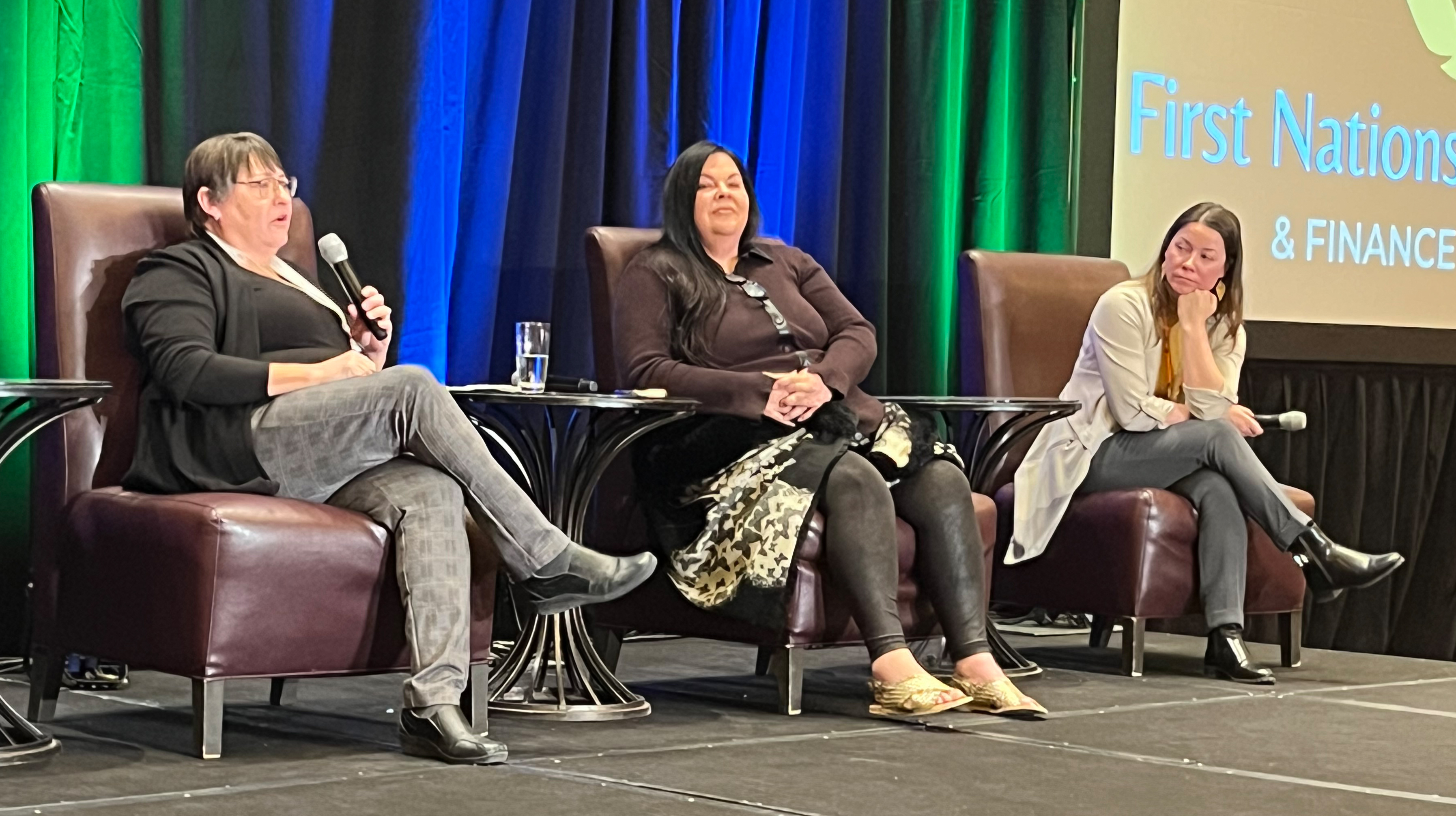
Image Caption
Local Journalism Initiative Reporter
Windspeaker.com
Cheryl Lambert knows a thing or two about running a business.
“I've been an entrepreneur since I was 14,” said Lambert, now 51. She is a member of Flying Dust First Nation in Saskatchewan, but her current company, called In Fine Feather, is based in Burlington, Ont.
“It is a 10-acre market garden and mercantile-based business that drives events and education and brings people together through food and fun,” she said.
Lambert shared her business experience story at the First Nations Agriculture & Finance Ontario conference, which was held over three days at the Casino Rama Resort on Chippewas of Rama First Nation. The conference concluded Feb. 5.
Lambert was a panelist for a session titled “Communities in Agriculture”. She was joined by Kailey LeDrew, who manages the Rama Community Farm located near the conference venue, and Kari Gray, a member of Algonquins of Pikwàkanagàn First Nation in eastern Ontario who operates Shades of Gray Indigenous Pet Treats.
Lambert said one of her biggest challenges as an entrepreneur has been deciding what to do next.
“That was always my problem,” she said. “I’ve probably had 20 or so different kinds of businesses. Not that I fly by night, because I don't. I’ve had the same phone number for 35 years. That’s got to tell you something. But I would do something and then get bored with it. And I think that really speaks to the biggest challenge I face in every business, which is staying relevant to my own business.”
Lambert’s previous endeavors included owning a trucking company, a driving range and various retail stores.
She said she is content with her In Fine Feather business, however. She’s only been operating it for about 10 months and has already made about $400,000 in revenue.
“I dream so big,” she said. “I want to actually do this across Canada and show people how to create a sustainable food-driven reciprocity business that can actually feed people for free. And you can still make a lot of money. And there's no shame in that.”
Lambert says it’s vital to have a company that is financially sustainable.
“I think that every time I've ever been in business, it boils down to one question: Does this make sense and can it make dollars? Because I think that's really what we're talking about,” she said.
“It's beautiful to have passion and be here for a purpose and all of that. It's necessary, in my opinion. But really, we're doing this for sovereignty ourselves, for sustainability, for our families and our own communities. And I think when it boils down to success, you have to focus on two things—the people you pay and the people who are going to pay you.”
Lambert also prides herself on building up others.
“I'm a businesswoman who likes to work her way out of a job,” she said. “I like to raise leaders. And I like to teach people how many of the businesses I've had that I have actually sold to somebody who worked for me. And that really gives me a lot of the great joy in raising other people up. I think we're all better together when we help each other.”
LeDrew said the Rama Community Farm, launched in 2018, is coming off its most successful year. The First Nation-owned and operated farm, however, does not focus just on making money, she said. It is deemed a success as it employs numerous community members teaching them skills that they can use later.
“What's happened is that the different departments within Rama are now taking more notice of us,” LeDrew said. “And they are reaching out to us and wanting to see how they can get involved in the farm, how they can run programs at the farm, how we can get our produce into their departments to distribute among the community.”
LeDrew said it would be cheaper for Rama officials to just buy food for members than to operate the farm, “but we lose out on that long-term investment in our community, in our kids, and what we're able to offer.”
As for Gray, she operated a meat business, but six months after her pet treats company was launched, she decided to focus on that.
“That's a real rewarding thing for me to do and look after and feel confident in the product that I could sell to pet parents,” Gray said. “For me, that's a real reward.”