
Image
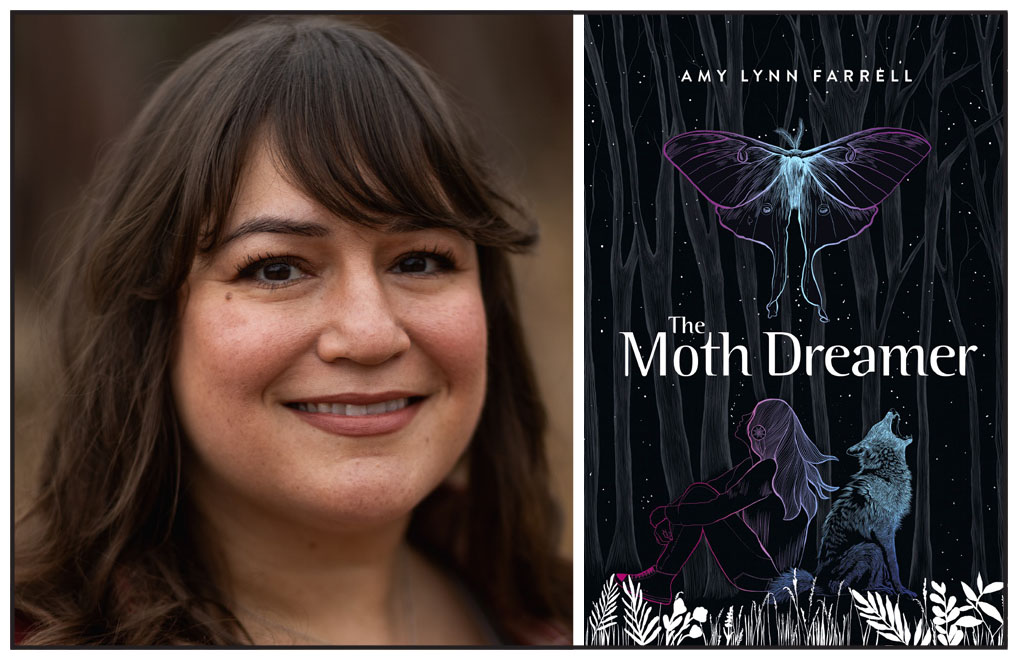
Image Caption
Windspeaker.com Books Feature Writer
Local Journalism Initiative Reporter
High school angst and death visions add up to a lot of trauma and growth for 16-year-old Aubrey, the hero in Amy Lynn Farrell’s first novel The Moth Dreamer.
Farrell, a member of the Eabametoong First Nation in northern Ontario, deftly weaves her Anishinaabe culture into Aubrey’s world. It is from that knowledge, along with the help of her kokum (grandmother), a medicine woman, that Aubrey comes to understand the battle she must fight in her dreams—and in her waking world.
Farrell, like Aubrey, grew up straddling the Anishinaabe world and the non-Indigenous world. And like Aubrey, Farrell was exposed to her First Nations culture.
“My mom felt it was very important that my sisters and I learn a lot about our culture, as much as we could outside of the city environment,” said Farrell. “We went camping usually in the summers since I can't even remember, so camp felt like a second home to me growing up.”
When Farrell was unclear about Anishinaabe protocols, she checked with her mother Ruby Slipperjack, also a published writer.
In The Moth Dreamer, Kokum and Grandpa Benny have built six small cabins on Kokum’s ancestral land in Ontario to accommodate the families of their two daughters, including Aubrey’s mother. It’s there that Aubrey is hit with her first death vision and tragedy strikes when her cousin dies. The story unfurls with Aubrey learning from Kokum about her visions while at the same time dealing with her grief, a new love at school, and bullying classmates.
Farrell creates a dark dream world for Aubrey that’s full of suspense.
“I definitely love writing about that idea of the mystery that can come from our dreams…As a young kid, I would love remembering my dreams when I woke up,” and she recorded them, she said.
In fact, Farrell drew inspiration from one of her dreams for the spooky opening sequence of The Moth Dreamer. Some of her other dreams create the setting for the fields and woods Aubrey finds herself wandering through in her sleeping moments.
As for the title of the novel, Farrell says she initially chose the butterfly to be Aubrey’s spirit insect although it didn’t quite seem right.
“I ultimately landed on the moth. It has a lot of…spirituality connections with the nighttime, which for me landed in that realm of the dream world. And definitely with that idea of transformation as well. Especially for Aubrey as she begins to learn and grow into herself and what she's come to understand about her gifts,” said Farrell.
The author also recalls how luna moths would cling to the door of the washroom and shower building at Sandbar Lake Provincial Park near Ignace in Ontario where Farrell spent many years.
“And I remember being frightened by them at first because they were so large, you know? In my kid’s self, they seemed very large. But I found that I would go back and…in the evenings I would go to that door and look and try to find those luna moths. They were so beautiful,” she said.
Farrell was careful to represent Weesquachak and the Windigo who feature prominently in the story “as authentically as I understand them…I wanted to make sure they remained culturally accurate.”
She stresses that it’s important to realize that “when we're talking about sacred stories, everybody will take from them how they see them, right? Because everybody has their own life experiences… I'm making room and (giving) permission for people, and especially young adults, to be able to imagine them differently and imagine them how they imagine them.”
All the chapter titles include Anishinaabemowin which also filters into some dialogue. The book concludes with a glossary of Anishinaabemowin.
“I am not a fluent speaker and learning the language has been a slow process for me, but it's something I wanted to...include so that I could be mindful about my language,” Farrell said. It was also an opportunity to teach young readers the language.
Farrell says she would love for young Indigenous readers to see themselves in the book whether as Aubrey, the experiences she has in high school, or the relationships she forms with Elders.
As for non-Indigenous youth, she hopes they can learn something about a new culture and how youth impact each other and handle different situations.
The Moth Dreamer is written for youth between ages 12 to 15. However, Farrell points out she enjoys reading Youth Adult, so she encourages older adults to read the book as well.
The Moth Dreamer is published by HighWater Press and will be released in April. It can be ordered at https://www.portageandmainpress.com/Books/T/The-Moth-Dreamer