
Image
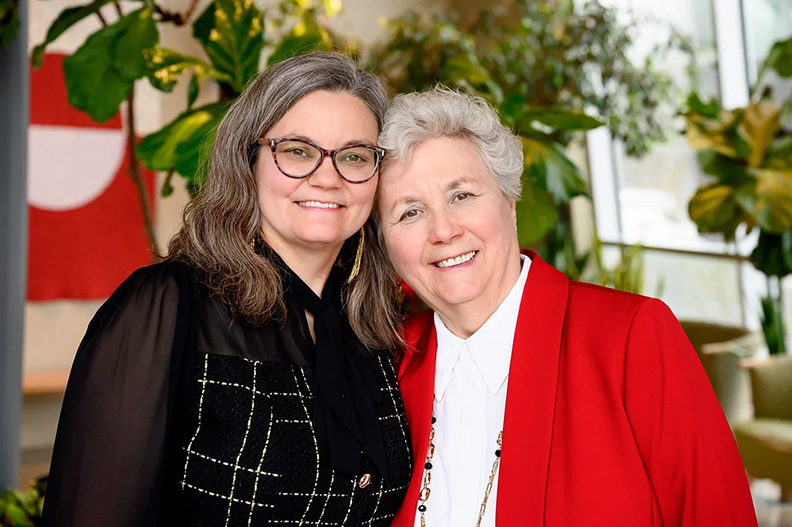
Image Caption
Local Journalism Initiative Reporter
Windspeaker.com
Karen Sunabacka, a Métis composer, will premiere a commissioned work at the Tafelmusik Baroque Orchestra’s Hearing Her Voice performances from April 30 to May 3 at the Jeanne Lamon Hall in Toronto.
“This piece has been a really fun project to work on, and I’m just really honoured that Tafelmusik asked me to write the piece,” Sunabacka said.
Her work, titled nitatisipwētānān: We are Leaving, is set to text written by her mother Joyce Clouston. It’s rooted in Métis intergenerational collaboration and storytelling.
“Working with my mom is always fantastic,” she said. Clouston is a knowledge keeper, author and social worker.
Performing the work is American soprano Amanda Forsythe, who received the 2026 Grammy Award for Best Classical Solo Vocal Album Telemann: Ino – Opera Arias for Soprano.
Tafelmusik generally spotlights women composers from the past. Aside from Sunabacka’s piece, all other works to be performed were written by female composers from previous centuries, including Elisabeth Jacquet de la Guerre, Barbara Strozzi, Mademoiselle Duval, Wilhelmine von Bayreuth, Maria Teresa Agnesi, Maria Margherita Grimani, and Mrs Philarmonica, an early-18th century English Baroque composer.
Tafelmusik, meaning table music in German, was founded in 1979 by harpsichordist Kenneth Solway and bassoonist Susan Graves. The duo wanted the focus of the orchestra to be on “historically informed performances”, which means music performed the way it would have sounded in its originating era.
“Our core repertoire generally is music that was composed between about 1600s to 1850s. That’s our area of expertise,” said Cristina Zacharias, artistic co-director of Tafelmusik and one of the violinists for Sunabacka’s piece.
“And we focus on performance techniques and instrument types that would have been the style that the composers wrote for at those times.”
By the 1990s, the Canadian Tafelmusik was regarded as one of the top Baroque orchestras in the world, performing across Europe, Asia and North America.
“What’s so powerful about this program (Hearing Her Voice) is the dialogue it creates across time, bringing forward extraordinary music by women of the past alongside a new work that speaks from the present,” said Zacharias in a press statement. “It reveals a lineage of creativity that has always existed, even if it hasn’t always been heard.”
Sunabacka said nitatisipwētānān runs about seven minutes long.
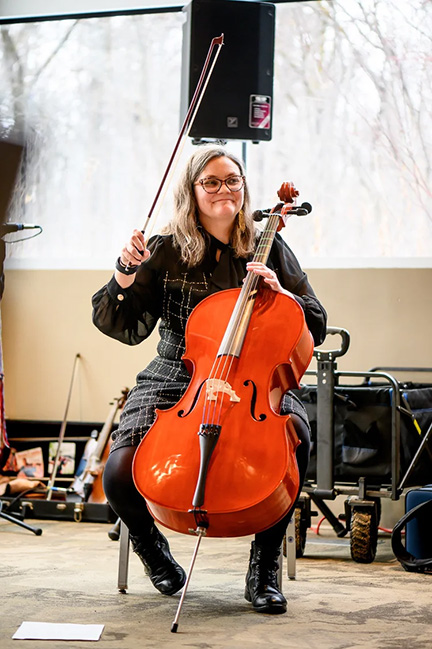
Sunabacka and Clouston began working on the piece in July 2025. At the time they knew they wanted to write about Margaret Kipling, an ancestor who ended up at the Brandon House trading post with The Hudson’s Bay Company in what is now Brandon, Manitoba.
In the early 1800s, Kipling, her family and other Métis families said their values didn't match The Hudson's Bay Company’s values and they were leaving.
“So, it's that moment where they decide we can't do this anymore, and then they leave and they end up settling in what is now the Salt Creek (Manitoba) area,” Sunabacka explained.
To ensure authenticity, Sunabacka and her mom travelled to where the trading post was, allowing them to visually and spiritually experience the surroundings Kipling and her family would have lived in during that time.
“We wanted to see where Brandon House was, and it’s not really easy to find,” Sunabacka said. “We got to somewhere where we think it was, and especially from some of the descriptions in the journals. We spent some time there. We just thought it was important to actually be on the river around where Margaret would have been.”
This allowed Clouston and Sunabacka to become engulfed in the sounds, smells and beauty of the landscape.
“I like to try to mimic a lot of the natural sounds, Sunabacka said of her music.
Once the text was complete, the two met with an Elder who was a Swampy Cree language specialist. They wanted to incorporate certain words throughout the piece, Sunabacka said.
“We’ve been told when we’ve met with Elders before that we really need to be putting Cree into our work and so that’s what we’ve been doing,” she said.
Zacharias said rehearsals for the world premiere was a special opportunity for the orchestra to sit with the composer and have her guide the intention of the work.
“It's a really exciting project to undertake because we get to have the composer sitting in the room with us and we can say, instead of wondering and using historical sources to guide us to find answers to what the composer might have had in mind, we could just ask the composer,” Zacharias added.
Tickets for the performances can be purchased at tafelmusik.org