
Image
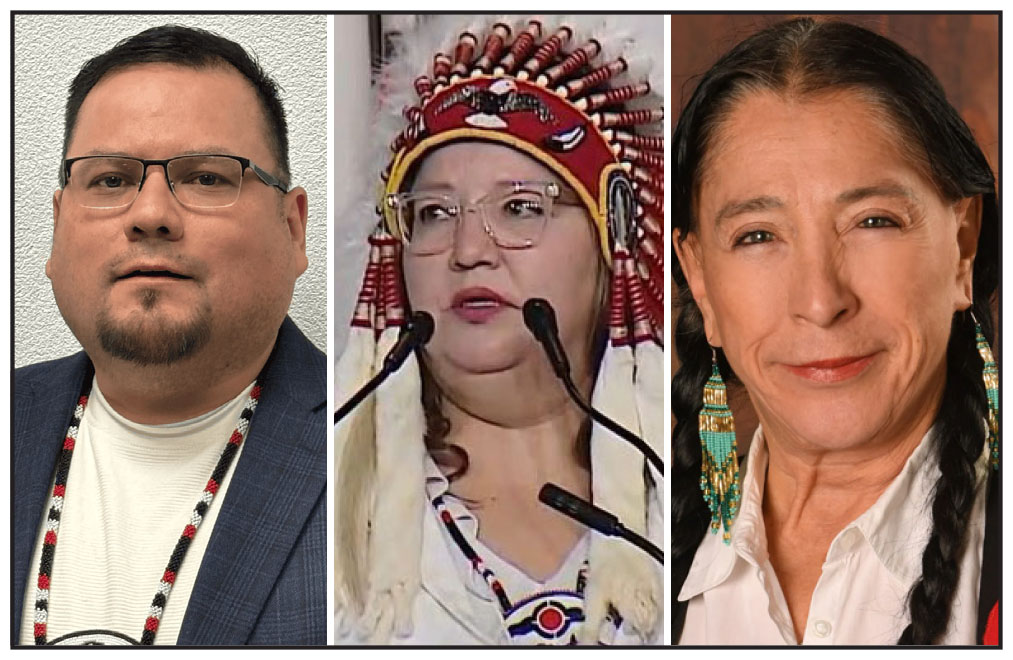
Image Caption
A question at a press conference in Ottawa held Sept. 16 by the Assembly of First Nations (AFN) to discuss October’s federal budget expectations led to concerns being expressed about the make-up and role of the Indigenous Advisory Council (IAC).
The IAC is an appointed board of 11 members that will work with Canada’s Major Projects Office on efforts to get projects of national interest built to combat the economic ramifications of tariffs imposed by United States President Donald Trump.
The Major Projects Office is meant to serve as a single point of contact for the selected projects. Its mandate is to streamline and accelerate regulatory approvals, and to structure and coordinate financing if necessary.
The reporter said that despite her best efforts, she hadn’t received “a straight answer” from government on what the IAC is supposed to do within the Major Projects Office regime.
“Well, we have not seen the terms of reference,” said AFN National Chief Cindy Woodhouse Nepinak. She said there was only one conversation with the federal government on the council’s role under the Bill C-5 legislation, the One Canadian Economy Act, but Woodhouse Nepinak insisted that “any advisory body, regardless of who’s on it or where it is, does not sideswipe First Nations people, and free, prior and informed consent.”
In a government statement Sept. 10 that announced the IAC appointments, it said the council’s role is to ensure participation of Indigenous peoples in projects of national interest, guiding opportunities for equity ownership and responsible resource management.
In a speech in June to the Toronto Region Board of Trade, Energy and Natural Resources Minister Tim Hodgson said the Major Projects Office will coordinate and expedite reviews focused on how projects will be built, “as opposed to whether it will be built,” which may seem to run counter to free, prior and informed consent of individual projects.
Canada has announced five major projects so far, with more on the horizon—the expansion of the Port at Montreal, the doubling production of liquified natural gas out of Kitimat, B.C., the construction of the Darlington New Nuclear Project in Clarington, Ont., which will make small modular reactors, the construction of the McIlvenna Bay Foran Copper Mine Project in Saskatchewan, and an expansion of the Red Chris Mine’s copper operation in northwestern British Columbia.
National Chief said she was hopeful First Nations have been included in discussions on these projects. There was, however, no consultation with the AFN on the make-up of the IAC. “I want to be clear about that,” she said.
“Nor did we have a mandate from our chiefs to be a part of that, so it would be disrespectful to be pushing for that.”
She said the federal government should have taken more time to go across the country to determine who should be sitting around that table, adding it was already a tough process to have the One Canadian Economy Act “rammed through Parliament in only 20 days. So I think expecting First Nations to come up with, in a day or two, to come up with names, why would we do that?”
She said the majority of a board anywhere in the country claiming to focus on Indigenous affairs or issues should be made up of First Nations representatives, based on diversity and population numbers of First Nations, as compared to Inuit and Métis. Canada’s appointments to the IAC includes two Inuit and two Métis representatives with the remaining seven of First Nations identity.
See the appointments in this Windspeaker article published Sept. 11: https://www.windspeaker.com/news/windspeaker-news/metis-nation-alberta-manitoba-first-nations-want-indigenous-advisory-council
Manitoba Regional Chief Willie Moore was concerned that Manitoba First Nations leadership was excluded from the Indigenous Advisory Council despite the very large First Nations population in that region. The Manitoba Métis Federation, instead, is the only Indigenous representation on the council from that province.
New Brunswick Regional Chief Joanna Bernard reasserted that the IAC was put together without consultation with First Nations and she questioned what criteria was used to choose the appointments.
She said Canada can look to its own history on whether the major projects it chooses will go forward without the free, prior and informed consent of First Nations.
“In Atlantic Canada there were some projects that did not go through because they did not consult, and our people took over the land and the work did not get done. So, be prepared that that may be something that First Nations may do.
“If they’re not doing it right, then we’re going to stand up. We’re not going to be folding down again as we did in the past… It’s going to be ownership and shareholders of these industries or it’s not going to pass,” said Bernard.
She said Canada could find itself on the wrong side of things if it doesn’t do the process right.
National Chief Woodhouse Nepinak said Canada and the provinces and territories have a major hurdle to overcome with First Nations people on major projects, saying the people are unsure and “they don’t trust. They’ve been pushed back for many years… They need to be given that respect of free, prior and informed consent from all these governments.”
Regional Chief Bernard concluded the discussion by saying, “Nothing about us without us, as we’ve said for the last 15- 20-years, and start with us; not at the end. I mean, that’s our problem right there. We’re being looked at as an afterthought. It’s got to stop.”