
Image
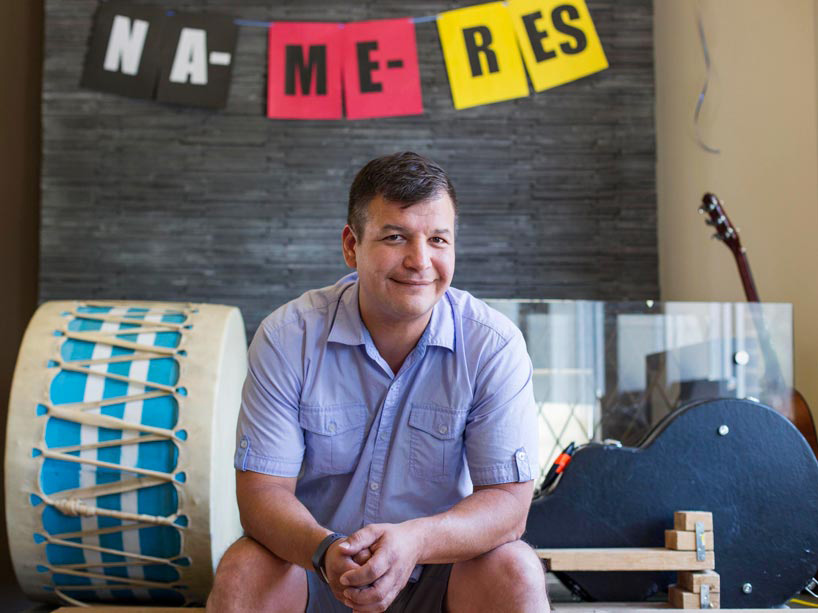
Image Caption
Local Journalism Initiative Reporter
Windspeaker.com
Steve Teekens believes he is facing increasingly more difficult challenges.
Teekens has served as executive director of Na-Me-Res in Toronto for the past 15 years. It’s an Indigenous-led organization that provides shelter space and housing developments to unhoused Indigenous men.
“I think we're among the few male-serving Indigenous organizations in the country,” said Teekens.
It’s no secret that when it comes to homelessness in Toronto, Indigenous men face this challenge at higher rates, as emphasized in the city’s 2024 Street Needs Assessment.
“It highlighted that of all the Indigenous homelessness, Indigenous men are disproportionately affected among that group with 59 per cent,” Teekens said.
And things are not getting better.
“It feels like climbing up a huge mountain,” Teekens said.
“While climbing the mountain, you can't look up to see the top. So, I don't think we've hit that peak yet. I hope in my lifetime we do. It's hard to tell. I’ve worked in this area of homelessness since 1995.” Teekens previously worked as a street outreach worker.
The homelessness issue is compounded by other problems.
“We now have an illicit drug supply that's toxic, that kills people,” he said. “That never used to exist in the early ‘90s. So, that's a new challenge that never used to be there.”
And there is an affordability concern as well.
“Affordable housing has become increasingly difficult to find, whereas in the ‘90s it wasn't so difficult to find affordable housing,” he said. “And we deal with far more death than we used to, a lot of overdoses that we never used to deal with in the past.”
Teekens said there are a variety of reasons why Indigenous men find themselves homeless.
“All the ugly things that comes with colonialism, their generational trauma and, I think, there's fewer opportunities for men that experience homelessness than other genders,” said Teekens, a member of Nipissing First Nation in northern Ontario.
Teekens believes there’s another reason why homelessness among Indigenous men in the city is higher.
“Often when people leave the justice system, like say jails, either federal or provincial, it’s often difficult to find housing or even employment once they're released,” he said. “So often it’s a pathway to homelessness.”
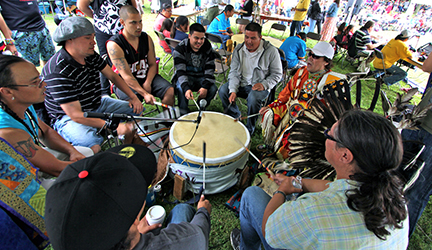
Teekens said Na-Me-Res, a shelter that opened in 1985, has 71 beds and is at capacity daily. While it generally provides shelter for Indigenous men, non-Indigenous men can utilize this facility.
Na-Me-Res opened up a second facility 16 years ago. Sagatay provides transitional housing for Indigenous men only. It can accommodate 22 men and is also at capacity at all times.
Na-Me-Res also began providing housing developments in Toronto in 2010.
“We have five properties that we're operating,” Teekens said. “We just acquired a sixth that we're starting to develop now.”
A 12-unit property opened in February. Another facility with 20 units was launched in April.
“We usually acquire the houses and retrofit them or redevelop them,” Teekens said. “The most recent one was a project that we built from the ground up.”
Despite the best efforts of the Na-Me-Res organization, Teekens said about 700 to 800 additional units are required for Indigenous men in Toronto alone.
The organization’s main source of funding is from the City of Toronto, but opening a new housing facility is not a cheap endeavor.
“That's probably one of the costliest kind of programs to get going,” he said. “You’ve got to acquire the property. You have to find the grants to do the retrofit or new build, which is not easy. It is time consuming in Toronto. To get a building permit quickly, you're looking at maybe two years.
“That’s how that process works. There's a lot of rhetoric about speeding up affordable housing. And that's all it amounts to is rhetoric because at the municipal level, usually at least in Toronto, all the hoops you have to jump through take a long time.”
Teekens believes the process could be partly sped up by eliminating statutory community consultations.
“In my experience, every time we have to consult with neighbours when we're moving into a neighbourhood, I always experience overt racism in my face,” he said.
Teekens said during tribunal meetings that review building code variances some neighbours provide written submissions, sometimes with their full names and addresses, that include racist commentary about why they oppose the development.
“It’s nasty,” Teekens said.
Though it might seem like he’s sometimes fighting a losing battle, Teekens forges ahead.
“I've learned to celebrate the small victories because I don't think we'll ever get the large ones just because the resources are not there funding-wise or any other types of resources,” he said. “It's very profound when you can move a bunch of men that have been chronically homeless for quite some time and get them into really nice affordable housing, a place that they can call their own, where they can have their sense of pride.”
Teekens said that’s the goal, to provide people with a place they can call their own.
“And it gives them opportunities to realize some of the goals they might have set for themselves,” he said. “So, some of our tenants have gone back to school, got a college diploma or degree. Some work for different not-for-profit organizations. Then we have some that they're on disability for various reasons and they probably won't ever enter the workforce. That's okay, as well.”
Na-Me-Res also provides cultural programs, including Ojibwe and Cree language lessons.
“The language is the basis of understanding our culture,” Teekens said. “Sometimes jokes are funnier in our language than they would be in English. So, it gives them a deep sense of cultural understandings. We also have a sweatlodge ceremony on site that the guys are able to participate in every other week.
“We have Elders that come in and traditional people that also come in. We empower the men by teaching them some of the men's teachings of our cultures. And empowering them that way to maybe pick up some of those traditional responsibilities that our men had in the past.”