
Image
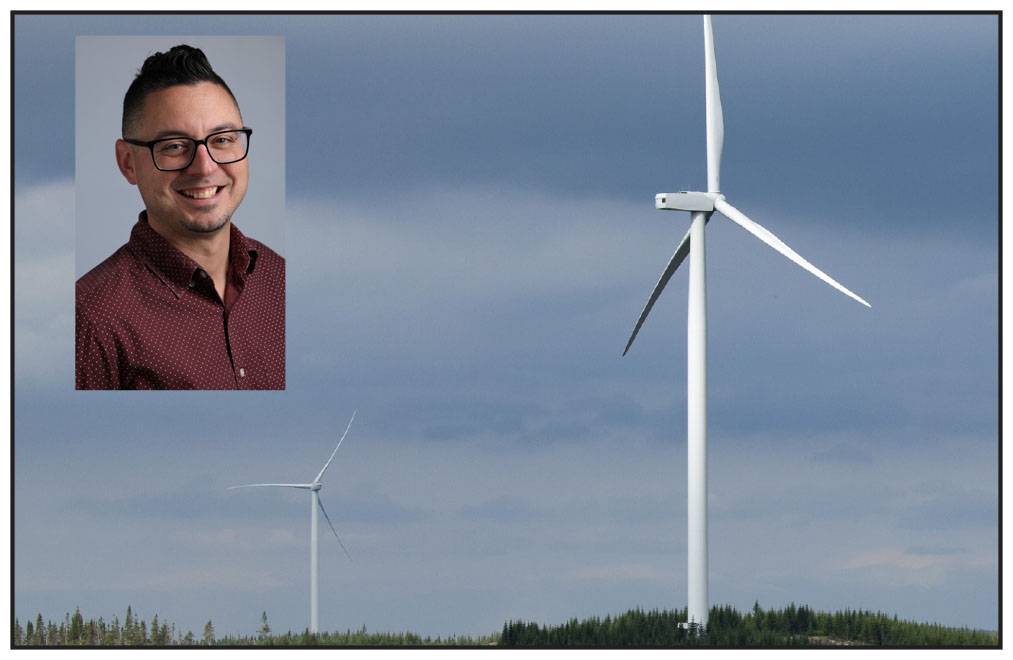
Image Caption
Local Journalism Initiative Reporter
Windspeaker.com
Representatives of three Mi'gmaq communities in Quebec have joined forces to explore the possibility of constructing a massive wind farm project in their territories.
The communities of Gespeg, Gesgapegiag and Listuguj, collectively known as the Mi'gmaq of Gespe’gewa’gi, are shareholders of the Mi’gmawei Mawiomi Business Corporation (MMBC).
It was announced in late August that the MMBC had partnered with Alliance de l’énergie de l’Est and Hydro-Québec to explore the wind farm project that could generate up to 6,000 megawatts of new wind power capacity.
The initiative is a green energy project that would create long-term revenues for the Mi'gmaq communities.
"We've been working on this for about the past year-and-a-half," said Fred Vicaire, CEO of MMBC.
Vicaire said there are areas of high wind potentials in the partnering communities with the potential to develop on each site.
"The next steps are basically highlighting these projects, which ones could come first and then engaging consultation with community members and the general public in those areas,” Vicaire said.
Wind power is not a new concept to the area.
"We already have participation in a wind farm project that's on our territory," Vicaire said. "It's a 150-megawatt project which is 50 per cent owned by us and 50 per cent owned by Innergex (which operates and owns wind and solar farms in North America)."
That venture was commissioned in December 2016.
"It's been operational since then," Vicaire said. "It's been operational for about nine years." A second phase is being added, which will provide another 102 megawatts of wind power and again will be co-owned equally by MNBC and Innergex.
"We won a bid from Hydro-Québec in the 2021 call for power," said Vicaire, who has been the CEO of MMBC since December 2020.
Vicaire realizes the existing wind farm and its addition will pale in comparison to the massive initiative being explored now.
"It's small potatoes," he said. "But the formula that we've applied to build those projects will be utilizing the same format for these, so maximizing employment and maximizing revenues; not just employment, but maximizing opportunities for local entrepreneurs from our communities to access contracts for those specific projects."
Whatever portions of the project that get constructed will have positive outcomes.
"It's still a success as we're in the driver's seat for what happens on our traditional territory," he said. "So, we view this as a win. We're no longer just a backseat passenger."
Though an agreement with partners has been reached, Vicaire said there is plenty of work that needs to be done.
"The transmission line is saturated on our territory," he said. "So, that's one of the objectives that we need to accomplish, sending the signal to Hydro Québec that there is a high wind potential here to invest on a new transmission line."
Vicaire believes it could be several years for this initiative to come to fruition.
"We are probably looking at the year 2030 (to complete)," he said. "I don't want to give a specific date. But before you work the project, get everything lined up, I'm assuming around that timeframe."
Vicaire is glad members of the Mi'gmaq communities are the ones leading the charge instead of being told what to do.
"Whatever happens with these projects, if community members say this area is non-acceptable because of XYZ, then we will respect those wishes and look at another area in that structural zone that they do accept," he said.
Elected officials from the partnering communities are pleased with the new agreement.
"The Mi’gmaq have inherent rights and responsibilities for the stewardship of the land, waters and living things of Gespe’gewa’gi," said Scott Martin, chief of Listuguj Mi'gmaq Government. "Our Peace and Friendship Treaties confirm our rights and responsibilities. And this agreement will empower us to fulfill them."
Rod Larocque, the chief of Gesgapegiag Mi'gmaq First Nation, said this partnership can be viewed as a step towards truth and reconciliation via economic development ventures.
"By having representation at the table shows collaboration and mutual respect to all those involved in Gespe’gewa’gi," he said.
Céline Cassivi, chief of Mi’gmaq Nation of Gespeg, said the agreement is a vital step for recognizing rights.
"We approach it with a firm commitment to defending our members' interests while focusing on constructive collaboration with our partners in the spirit of reconciliation," she said. "We made it a point to be present in the discussions and will continue to participate to ensure that economic development takes place with respect for our territory and for the benefit of all."