
Image
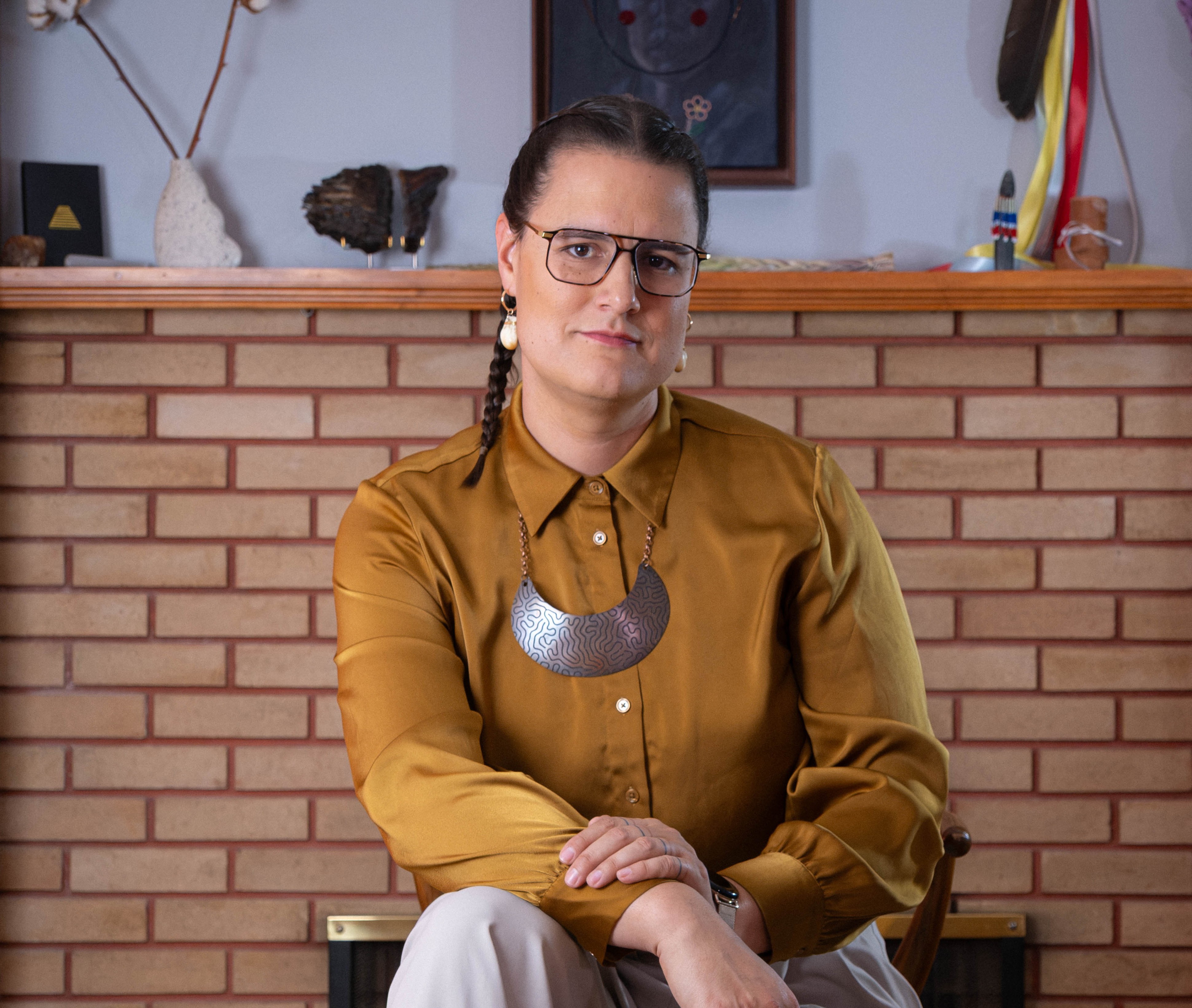
Image Caption
Local Journalism Initiative Reporter
Windspeaker.com
John Mahli Lawa' Hampton has been appointed the first Indigenous director and chief executive officer for the Winnipeg Art Gallery-Qaumajuq (WAG-Qaumajuq) effective Dec. 10. WAG-Qaumajuq is home of the largest public collection of contemporary Inuit art in the world.
“John made absolute sense,” said Aynsley Cockshott, chair of the WAG-Qaumajuq Board of Governors. “John is the right person.”
Hampton, from the Chickasaw Nation in the southern portion of the Great Plains of Oklahoma, was chosen for the position following an international search by the board with the Arts Consulting Group, a team of professional management consultants.
Hampton said it was “complex feeling” being the first Indigenous person to fill the position.
“I’d say the main word is humbling. It comes with a lot of responsibility, especially (with) my nation not being from that territory. It comes with that responsibility to make sure that I am listening to and making as much space for the local nations as I can and to make sure that I do right by those nations, do right by my own nation, that I’m a good representative. And also, we work to make sure that there is more representation in the future so that there’s not just one or two Indigenous directors in Canada,” Hampton said.
Born in Boston, they moved to Alaska for a few years in their early years, but spent most of their childhood in Regina.
Hampton’s resume includes roles as executive director of the Art Gallery of Southwestern Manitoba, executive director and CEO of the McKenzie Art Gallery in Regina, member of the steering committee for the Canadian Arts Summit, advisor to Canada Gallery in London, UK, and as a long-time board member of the Indigenous Curatorial Collective.
“It made so much sense that John would be the next director and CEO, given their reach, their experience, their education, their executive presence, if I can call it that, and then their ability to really, really further the work in the Indigenization piece that the WAG has been doing,” said Cockshott.
The WAG-Qaumajuq Board of Governors conducted extensive community outreach, consulting members of its Indigenous Advisory Circle, volunteers, donors, government partners, neighbours such as the University of Winnipeg and artists. Additionally, the Arts Consulting Group also drew on its expertise to conduct a broad search across Canada and internationally.
Throughout the process and call out, Cockshott said it was made clear WAG wanted the person who filled the position to be of Canada. Whether that meant someone who had moved away to further their career or someone already located within the country.
“They may have other affiliations or other nationalities attached to that, but we wanted to make sure that we were really supporting the Canadian arts ecosystem,” she said.
When Hampton surfaced as one of the finalists, Cockshott was able to call on her own experiences of them during their time co-chairing the Canadian Arts Summit in Ottawa and Banff.
“Here’s a person who’s leading a major gallery in Canada—the Mackenzie—with a great reputation and is doing really good work,” she said of Hampton’s leadership roles.
“And, of course … we have a very rich component of Indigenous communities in Winnipeg and throughout the province and then there’s also the Inuit art piece, which John, not being Inuit, of course, but very much his approach to things is listening, learning and being respectful of various groups. And so those are the reasons why John really stood out to the board,” Cockshott said.
“And then finally, not finally, but sort of concurrently, was John's credibility, their stature, their identity as part of an Indigenous community, the Chickasaw Nation, and the work that they have done at the Art Gallery of Southwestern Manitoba in Brandon, and then again at the Mackenzie because, of course, the WAG has also been doing a lot of work over the years in Indigenizing the gallery, in working to respond to the Truth and Reconciliation Calls to Action as they relate to galleries and museums,” she said.
“I’ve been in the arts world my whole life,” Hampton said. “I started as an artist and curator, worked in Toronto at a couple of galleries there for a while, and now I’m pretty firmly rooted in the director and leadership roles.”
When first starting as an artist, Hampton specialized in conceptual and performance-based practices, while also creating new media and lens-based work.
“So not the most traditional mediums,” Hampton said.
It happened somewhat organically, making the transition from artist to curator and then to director, they said. It was mostly due to people requesting or inviting them into these other roles.
“I think I went where people asked me to go. There were gaps in leadership in institutions and people encouraged me to apply to them, and then, gradually, it was something that was exciting to me. And I’ve always been a believer in trying to fulfill the roles in the community that you’re asked to take on, and that’s what brought me to where I am now.”
Hampton said fulfilling a calling was something their parents instilled in them.
“I guess that’s what my parents taught me growing up… And also to do what feels like the right choice in the moment, to not try to over plan your career or your life and just do what feels right and you’ll end up where you’re supposed to be. That’s something that I try to follow still to this day,” Hampton said.
One of the first items on Hampton’s agenda is to spend time meeting with people from the communities served to get a better sense of the role WAG-Qaumajuq should be playing in the community.
“What we could be doing better, what we are doing really well that we just need to keep working on and to build trust. To go find out what else is happening in the cultural community there and just learn as much as I can is really what that first year is going to be about before I start setting too many directions,” Hampton said.
One of the main reasons Hampton was interested in the position was due to the rich history and current goals of the gallery.
As the oldest civic art gallery in Canada, the WAG-Qaumajuq has what Hampton describes as “amazing staff, artists and Elders” who have helped guide the institution to a strong stewardship model that also embraces the two-spirit community.
“There’s just so many exciting things within the work of Indigenization and decolonization that makes it an exciting place and doing so in a way that is also very representative of other diverse communities that call the territory home,” Hampton said.