
Image
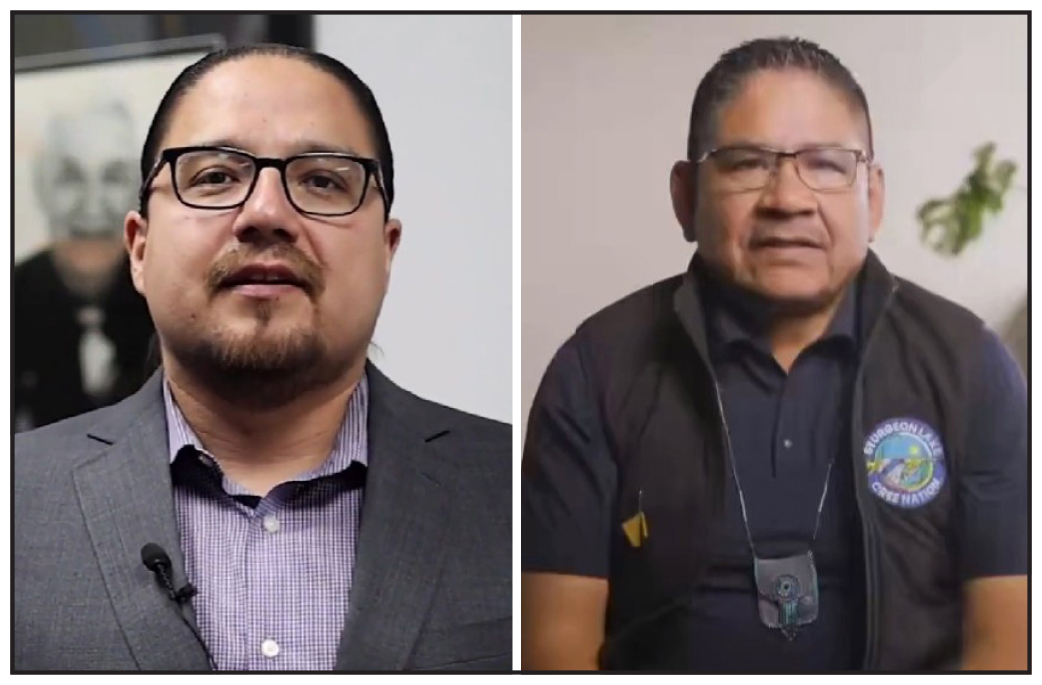
Image Caption
Windspeaker.com
Edmonton Northwest MP Billy Morin and Sturgeon Lake Cree Nation Chief Sheldon Sunshine are urging Indigenous Albertans to get out on Oct. 19 to vote to remain in Canada, emphasizing the stakes for treaty rights and future generations.
Their appeals come as advance voting continues on 10 referendum questions, including whether Alberta should remain a province or begin the legal process toward a future binding vote on separation. The separation question on Monday is listed as Question 10. It is non-binding and would not itself take Alberta out of Canada.
In a video promoted by the Vote to Stay campaign, Morin, a Conservative MP and former chief of Enoch Cree Nation, encouraged people to discuss participating with family, friends and community members.
“Don’t assume someone else will speak for you. Make your voice heard,” he said.
“It has been said that this referendum is a violation of our treaty. I respectfully disagree,” Morin argued.
Sunshine, in a separate video message, urged Sturgeon Lake Cree Nation members living in Alberta to choose Option 1 on Question 10 — "Alberta should remain a province of Canada."
He argued that Option 2 would violate the treaties and that Alberta has no jurisdiction to end First Nations’ relationship with the Crown.
“Secession cannot happen without our consent,” he said. “For unity, for treaties, and for our future, it is important to vote Option 1.”
The Confederacy of Treaty No. 6 First Nations, formed in 1993 as a collective political voice for its member Nations in Alberta, also urges Option 1 and “no” on the other nine questions. Its members include Enoch Cree Nation, Sunchild First Nation and Alexis Nakota Sioux Nation.
Its campaign argues separation would violate the treaties, Indigenous sovereignty and Section 35 of the Constitution Act, 1982, which recognizes and affirms existing Aboriginal and treaty rights.
“Voting is one way we protect our treaty relationship and make our voices heard,” its campaign page states.
The campaign follows an emergency resolution adopted at the Assembly of First Nations’ annual general assembly in July.
According to the Confederacy’s July 16 news release, the resolution was put forward by Grand Chief Joey Pete of Sunchild First Nation, and former Assembly of First Nations national chief Matthew Coon Come, acting as a proxy for the Cree Nation of Nemaska in Quebec.
The resolution says provinces cannot change or take away treaty rights or rewrite First Nations’ relationship with the Crown. It calls on governments to work directly with affected First Nations and obtain their freely given, informed consent before constitutional or political processes affecting them proceed.
On May 13, Alberta Court of King’s Bench Justice Shaina Leonard quashed approval of an earlier citizen initiative petition seeking a vote on independence. Athabasca Chipewyan First Nation, Piikani Nation, Siksika Nation and the Blood Tribe brought the challenges.
Leonard found that the petition’s approval triggered Alberta’s duty to consult because the process could adversely affect treaty rights. The province had not consulted the applicant Nations. That ruling concerned the earlier petition process, rather than the non-binding Question 10 now before voters.
Alberta is appealing, arguing the court made an error of law. Its referendum website acknowledges the ruling remains binding and says the government wants voters’ direction without waiting through potentially lengthy court proceedings.
Alberta Premier Danielle Smith recently announced that she has cast her vote to remain in united Canada, while pursuing greater provincial autonomy within the federation.
Option 2 reads: "The Government of Alberta should commence the legal process required under the Canadian Constitution to hold a binding provincial referendum on whether or not Alberta should separate from Canada." But, even a future vote favouring separation would not, by itself, take Alberta out of Canada.
Under the federal Clarity Act, Ottawa could negotiate separation only after the House of Commons determined that the question was clear and a clear majority supported leaving. The act sets no fixed percentage for that majority; MPs must consider the margin, turnout and other relevant circumstances.
Both assessments must consider formal statements and resolutions from Indigenous representatives, particularly those in the affected province.
Separation would require a constitutional amendment and negotiations involving at least Ottawa and every provincial government. Before a federal minister could propose that amendment, negotiations would have to address relevant Indigenous rights, interests and territorial claims, alongside issues such as borders, public assets and debts, and minority rights.
The other nine questions Albertan’s are considering concern immigration, access to provincial services, proof of citizenship for voting, and proposed constitutional changes involving courts, the Senate, federal programs and provincial powers.
Canadian citizens who normally live in Alberta and will be at least 18 on Oct. 19 can vote and register at the polls. In-person voters receive separate, colour-coded ballots and may decline any. Question 10 offers two options; the others require a “yes” or “no” vote.
Advance voting runs Oct. 13 to 17 at any advance polling location in a voter’s electoral division. On Oct. 19, voters must use their assigned polling place which be open from 9 a.m. to 8 p.m. Anyone in line at closing can vote. Find locations and advance hours through Elections Alberta’s Where to Vote tool.
Bring government-issued photo ID showing your name and current address, or two accepted pieces showing your name, one with your current physical address. Voters living on a reserve or Métis Settlement may also use an attestation form completed beforehand by an authorized official.
Mail ballot applications have closed. Completed packages must reach Elections Alberta by mail by 5 p.m. Oct. 16. Unofficial results are due within 48 hours after voting closes; official results are scheduled for Oct. 29.