
Image
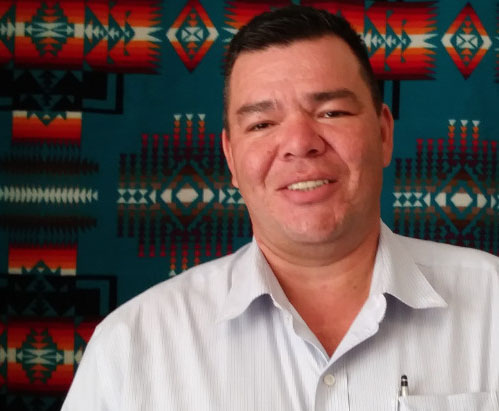
Image Caption
Local Journalism Initiative Reporter
Windspeaker.com
Updated: Nov. 14, 2025
George Casimir and his Community Future Development Corporation (CFCD) colleagues from across the province of British Columbia have been yearning to host a major agricultural conference in their home province.
And they are about to get their wish.
They are co-hosting the Indigenous Agricultural Conference in the B.C. city of Kamloops.
Casimir, a member of Tk’umlups te Secwepemc in British Columbia, has owned and operated his own farming business for the past quarter century.
He’s also the general manager of the Community Futures Development Corporation of Central Interior First Nations.
The event, which runs Nov. 18 to Nov. 20, will be staged at the Coast Kamloops Hotel & Conference Centre.
Though it is called the Indigenous Agricultural Conference, the event will include both Indigenous and non-Indigenous producers, community leaders, policymakers and agribusiness innovators from across British Columbia.
“Things are really coming together and we’re looking forward to a great couple of days,” Casimir said.
The conference will feature a pair of components.
Days one and two will feature various keynote presentations and panel discussions on topics including access to capital, food systems innovation and Indigenous-led production. A Ranching for Profit workshop will begin on day two, and continued on the third day.
“It’s a very difficult thing to do, especially in our environment,” Casimir said of making money via ranching. “But they have techniques and resources to really help and benefit those in the industry. I think it's going to be an amazing event with a lot of takeaways for the participants.”
He said a pair of smaller agricultural conferences were held in Kamloops before the pandemic hit in 2020. They attracted people from in and around the city.
“It was very localized,” Casimir said. “Now we have some national organizations that will be joining us and provincial organizations as well. It's going to be just a great networking opportunity and for people to talk agriculture.”
Organizers are anticipating at least 180 attendees. Casimir is thrilled both Indigenous and non-Indigenous individuals will take part.
“Right now, it's about half and half,” he said. “It is the Indigenous agri conference but the biggest message we have out there is it's for the whole community, the whole region. And it's about partnering and working together to develop these ideas.”
Besides the pair of small-scale agricultural conferences, Casimir said an economic unity conference was held in Kamloops several years ago. It featured 34 speakers, half of which were Indigenous and the other non-Indigenous.
“It shows our commitment to work within our province with all of our partners,” Casimir said, not surprised to see a lot of co-operation in the industry.
“If we're looking at new things in agriculture ranching, we have to consider things like agritourism or agritech,” he said. “It just seems like everybody is growing that footprint to be wider partners provincially and across the nation.”
“I think there was a lot of factors that kind of delayed having this specific conference,” he said. “As we know, there was a lot of emergency lending and a lot of work to do in the financial community to rebuild the economy (after the pandemic) and get the business of ranching and farming back to the way it was.
“So, I think maybe some of those factors could have delayed having this. And sometimes it just takes some time for the partners to get together and say ‘Let’s host something because we need it.’”
Casimir would like to have a conference yearly.
“We would love to co-host this annually and make it a bigger event, just to bring the farming and agriculture ranching and communities together under one roof to talk about new sustainable ideas, new partnership opportunities,” he said.
But he can’t predict whether that will happen.
“We cannot foresee some of the things that we've all gone through in the last few years, including the COVID shutdown,” he said. “In the interior we've also had everything from wildfires and floods. So, there's a lot of things that impact not only the business of ranching and farming but the whole province.”
For now, he’s just glad this year’s conference is a go and the agricultural sector in the province is stable.
“It just wasn’t the right time two- three years ago,” he said. “Now I think we're on solid ground and we're really moving forward and we just really want to promote and support and let people know what great things are out there.”
The other co-hosts of the conference are Indigenous Business Development Services, Stó:lō Community Futures, Haida Gwaii Community Futures and Community Futures Cariboo Chilcotin.
More information on the conference, including registration details, are available at