
Image
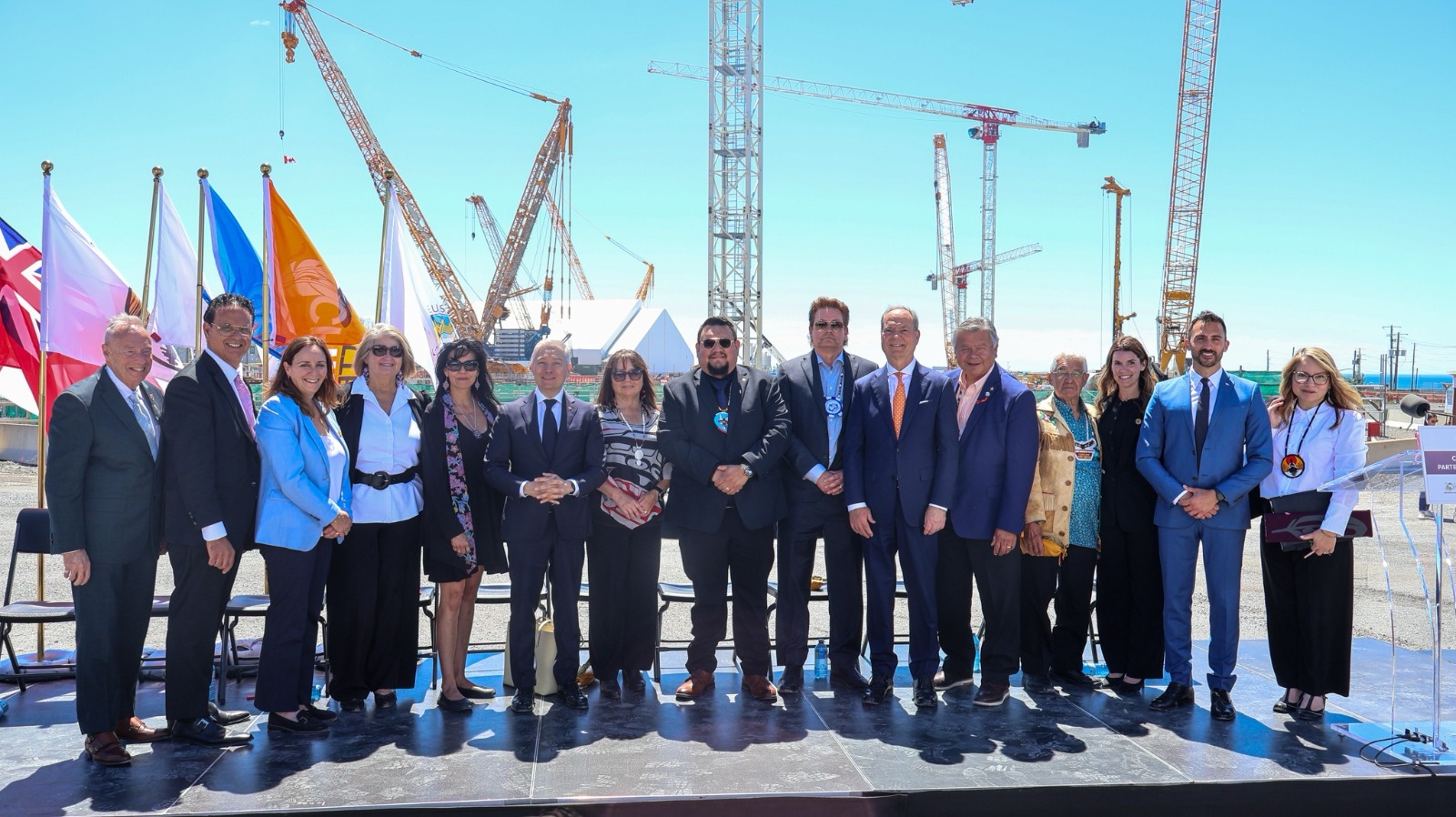
Image Caption
Local Journalism Initiative Reporter
Windspeaker.com
A day after the federal government revealed Canada's new nuclear strategy, leaders from seven First Nations in Ontario were beaming with pride as details of an historic agreement were announced.
At a June 23 press conference held in Clarington, Ont. it was announced that the Williams Treaties First Nations were investing more than $700 million in Ontario Power Generation’s Darlington New Nuclear Project, specifically the first of four Small Modular Reactors (SMRs).
SMRs cost billions to construct, so this investment provides First Nations a “significant minority interest” in the project. The exact percentage of ownership is still to be determined.
Once the project is fully operational it will generate up to 1,200 megawatts of electricity for the provincial power grid, enough for 1.2 million homes.
“This represents the largest collective First Nation investment in a nuclear generation project in Canada,” said Chippewas of Rama First Nation Chief Ted Williams. “And today's announcement is much more than the size of the investment. It is about what the investment makes possible. “It's about creating opportunities for future generations. It's about creating long-term economic benefits that will help to support the priorities identified by our First Nations, whether it's housing, education, language revitalization, health and wellness, infrastructure, economic development and opportunities for our youth.”
The Williams Treaties First Nations that jointly share in the investment are Chippewas of Rama, Mississaugas of Scugog Island First Nation, Alderville First Nation, Curve Lake First Nation, Beausoleil First Nation, Chippewas of Georgina Island First Nation and Hiawatha First Nation.
François-Philippe Champagne, the federal minister of finance and national revenue, also attended the press conference and provided details of the loan guarantee, the largest Indigenous loan guarantee ever issued in Canada, that will power the investment.
Half of the loan, which totals about $715 million, is being provided by Canada’s Indigenous Loan Guarantee Program. Ontario is providing the other half via its Indigenous Opportunities Financing Program.
The project “will make Canada the first G7 country to have a small modular reactor, driving $500 million annually into Ontario’s nuclear supply chain” over the next 65 years “and sustaining 3,700 jobs annually, including 18,000 during construction,” reads a federal government press statement.
First Nations leadership spoke with enthusiasm about their involvement.
“It is about ensuring that future generations inherit not only our rights but also stronger communities with greater opportunities for all who come after us,” Williams said.
“Love is not measured by what you say,” he said. “It's measured by what you leave behind and the impact that you have on your community, on your people, on your family. And the choices we make today will help shape the future generations that will inherit tomorrow.”
Kelly LaRocca, chief of Mississaugas of Scugog Island First Nation, credited previous leadership for their tenacity in protecting Williams Treaties First Nations communities.
“For close to a century, the chiefs and citizens of the Williams Treaties First Nations worked to have our treaty rights recognized, respected and affirmed. Generation after generation carried that work forward. Many are no longer with us today, but their efforts, their determination and their belief in a better future for our people has laid the foundation for this moment.”
The Williams Treaties Final Settlement, which was reached in 2018, included more than $1.1 billion in financial compensation from federal and provincial governments for the seven First Nations. The settlement resolved claims that arose from the 1923 Williams Treaties land surrenders.
“With treaty rights that are constitutionally recognized, our Nations are now invited as decision makers to consider economic development opportunities in our treaty territory that would never otherwise have been made available,” LaRocca said. “No longer on the periphery, we celebrate today as one example of what can happen when First Nations work together toward a shared vision for our communities.”
LaRocca said First Nations are much better off when they work collectively.
“For generations, our leaders understood that to thrive, the vision for success must be larger than any one First Nation chief, council or community,” she said. “That collective visioning is what guided our Nations through decades of advocacy.”
Alderville First Nation Chief Taynar Simpson said First Nations leaders were taught that they do not inherit the earth from those who came before.
“We borrow it from those who will come after us,” he said. “Every decision we make must be measured not only by its benefits but by its responsibilities. We believe stewardship means helping shape the future. It means asking difficult questions and undertaking careful review. It means ensuring that Indigenous voices are part of the decision that shape our future.”
Simpson said First Nations participation in the Darlington project does not lessen those responsibilities.
“When we have a seat at the table, we also have an opportunity and an obligation to advocate for the responsible development, environmental protection, accountability, and long- term stewardship,” he said. “It asks us to think about the generations who will one day look back and judge the decisions we have made.”
Ontario’s Minister of Finance Peter Bethlenfalvy was one of the provincial representatives who attended the press conference.
“This investment demonstrates the power of partnership to drive economic opportunity and long-term growth,” he said. “By bringing together First Nations communities, governments and industry, we are helping to build the infrastructure and investment climate that will support Ontario's prosperity for generations to come.”
In a CBC interview on the project, Ontario's Minister of Energy and Mines Stephen Lecce said the Williams Treaties First Nations will be provided opportunity to purchase equity in the three other SMRs as they are constructed.