
Image
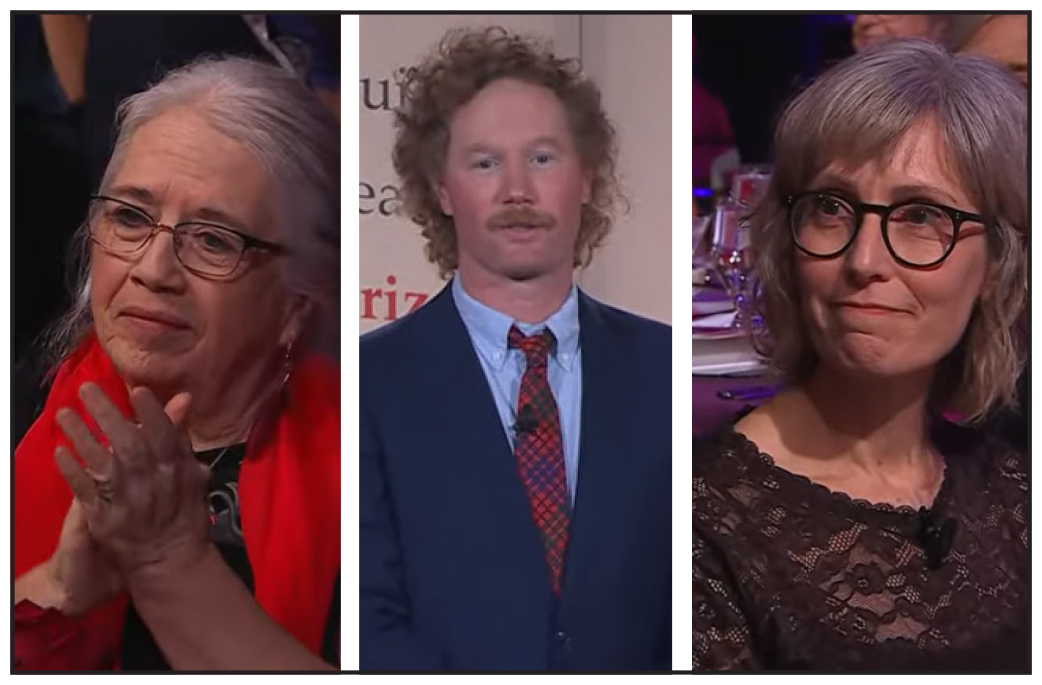
Image Caption
Windspeaker.com Books Feature Writer
Local Journalism Initiative Reporter
Neither Indigenous author shortlisted for the Giller Prize 2026 came home with the hardware, but Michelle Good says their accomplishments have opened doors for other Indigenous writers.
Good, from the Red Pheasant Cree Nation who now calls Maple Creek in Saskatchewan home, was shortlisted for the prize for her book Eliza Sunshine. Tara Gereaux of the Métis Nation—Saskatchewan who lives in Regina was similarly given the nod for Wild People Quiet.
The women were among five writers up for the prestigious prize, which comes with $100,000 for the winner and $10,000 for each runner up.
This year’s Giller Prize went to Nicholas Herring for Your Breath in Charcoal. It’s about a young, blue-collar Islander heading to Upper Canada in the late ‘90s, Herring said at the gala ceremony Nov. 16 held at the Ritz Carleton Hotel in downtown Toronto. “There he experiences love and madness and loss and comes to terms with the nature of existence.”
Also shortlisted were The Small Ones by Nazanine Hozar and Good People by Patmeena Sabit.
Speaking to Windspeaker.com separately prior to the gala event Monday both Good and Gereaux were sage about making it this far in the process. The jury, made up of the owners of independent Canadian book stores, deliberated on more than 140 books released in 2026, narrowed it down to 14 and from there picked the five finalists.
“Nobody opened the door for us. We knocked the doors open. And it was only after a few years of those books (by Indigenous writers) being published through smaller presses that the big houses began realizing that these were marketable works,” said Good. ”And then the doors started opening in a bigger way. As an Indigenous author, I am just thankful for the people who came before that worked on making these things possible.”
Both Eliza Sunshine and Wild People Quiet examine, in their own intimate ways, the questions of identity and how some Indigenous people chose to hide who they were for fear of violent repercussions.
Both books are inspired by family members. For Good, Eliza Sunshine is a tale told, in part, of her mother. Wild People Quiet visits Gereaux’s grandfather’s decision in the 1940s to hide his Indigeneity.
Gereaux contends that both works spoke to the reading public and the judges “because they're such personal stories in a way that we're both deeply connected to these stories. And I think that resonates…I'm hoping that is what came through in the writing of it that is creating this response.”
Gereaux believes the Canadian public is now open to hearing such stories because reconciliation has brought about an awareness that history has been told in a “biased and one-sided” way.
“I think that there's a greater openness. I think there's more conversations happening. I mean, not just in publishing or even just in the arts sector. So I think it's beyond that. I think there's people more willing to learn about the things that hadn't been so openly discussed before,” Gereaux said.
In 2020, Good’s book Five Little Indians was longlisted for the Giller Prize. It won the Governor General Literary Award. With Eliza Sunshine shortlisted this year, Good has made the list of top contenders for two of Canada’s most prestigious literary awards.
“You don't write books with awards in mind. You don't write books, you know, hoping you'll be nominated for this and that. You write books because you want the story to be told. And so when you do get nominated for these kinds of awards, it's an indication to yourself that you can say, ‘Yeah, I did it. I got that story across’ because you wouldn't get those nominations if the story didn't come across clearly,” said Good.
“So for me, it's an indication of success, not in terms of putting prizes behind your name or money awards or anything like that, but that this story that was very important to me, to my mother, has been successfully told.”
Gereaux says she’s “stunned” by the response Wild People Quiet received.
“I honestly thought that it would reach a few people, especially people from the prairies where there's a large Métis population. I didn't anticipate that this book would be read from coast to coast and have responses and reactions from across the country,” she said.
“I have to say I've been feeling so grateful and so honoured that people and families have been reaching out to me and sharing their family stories about these things that have happened in the past, but not talking about it, but hiding it.”
Host Rick Mercer referred to the “Giller Effect” at the gala. Books shortlisted see increased sales and the winner ends up at the top of the bestseller’s list, he said.
“I feel extremely lucky that more Canadians, people across the country, are going to be aware that this is something that really happened and hopefully have a better understanding of why it happened. People did it for survival,” said Gereaux.
That this is the second novel Gereaux has written and that it’s garnered such praise doesn’t put any pressure on her for the third novel. In fact, she says, just the opposite.
“I do have a next project idea in mind, but I almost feel like I know that nothing is going to be received in the same way that this has. So I don't feel that pressure because I feel like this has been a once in a lifetime thing. And so I can move on to the next project without feeling the weight of this,” she said. “So it's more liberating.”
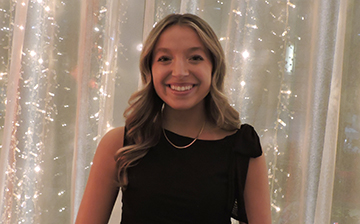
For Audrey Gignac, a member of the Métis Nation of Ontario and student at Brock University, writers like Good and Gereaux stand out.
Gignac attended the gala as one of three recipients of $10,000 from the Giller Mantella Scholarship Award, which goes to Black, Indigenous, or racialized Canadian students who are starting or continuing a fulltime first bachelor's degree or diploma in English Literature or Creative Writing.
“I am incredibly inspired by (them). It almost makes me choked up because it's just amazing to see that there is a place for people like me in this literary community and for those voices to be heard. So I'm honoured and I think it's amazing,” said Gignac. “I also hope to write about Métis stories and Indigenous voices and perspectives someday.”
Good put the authors’ achievement in perspective.
“We created a place for ourselves in the literary canon and that place is being shown as established by the fact that, for the biggest literary prize in Canada, two Indigenous authors are being shortlisted,” she said.
The Giller Prize has never been won by an Indigenous writer although eight books have been longlisted, including two each by Conor Kerr and katherena vermette, and until this year, two others, both by Eden Robinson, have been shortlisted.