
Image
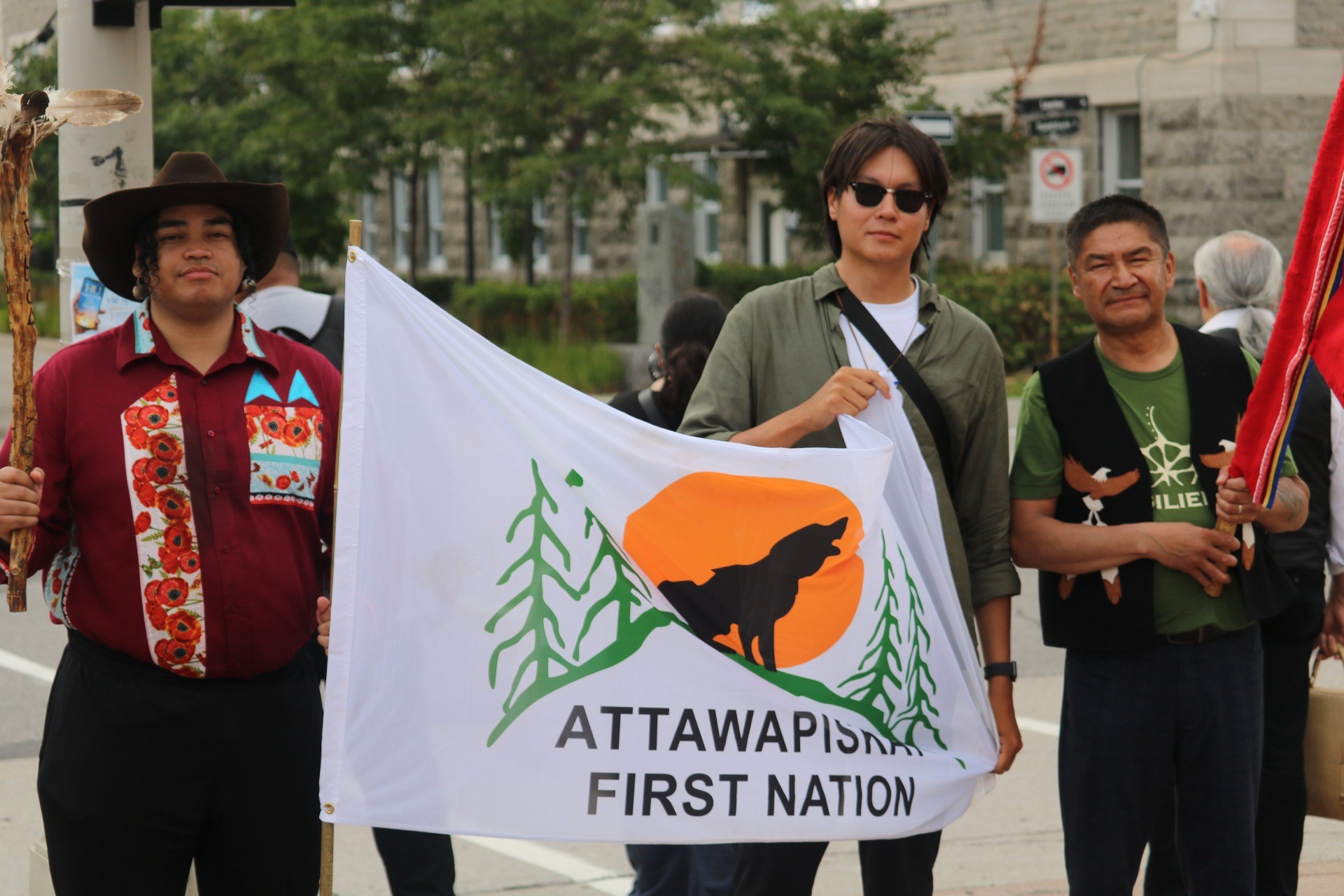
Image Caption
First Nation youth from northern Ontario protested a major meeting between hundreds of chiefs and Prime Minister Mark Carney at the Canadian Museum of History in Gatineau, Que. near Ottawa on July 17.
The event was held to discuss the recently passed federal legislation Bill C-5, the One Canadian Economy Act, which encompasses the Building Canada Act.
Jeronimo Kataquapit, an Attawapiskat First Nation youth leader, led a group of 20 other young First Nation protesters to the entrance of the meeting and were turned away by security. Media had also been blocked from the event. The meeting only included an invited list of leaders and government participants to take part.
“When people come into your home, you don't stand by and watch them do whatever they want. You protect it,” said Kataquapit, speaking to reporters outside the meeting.
At midday, the group of youth attempted to join the meeting when they marched to the building’s main entrance and were met by RCMP officers who denied them entry.
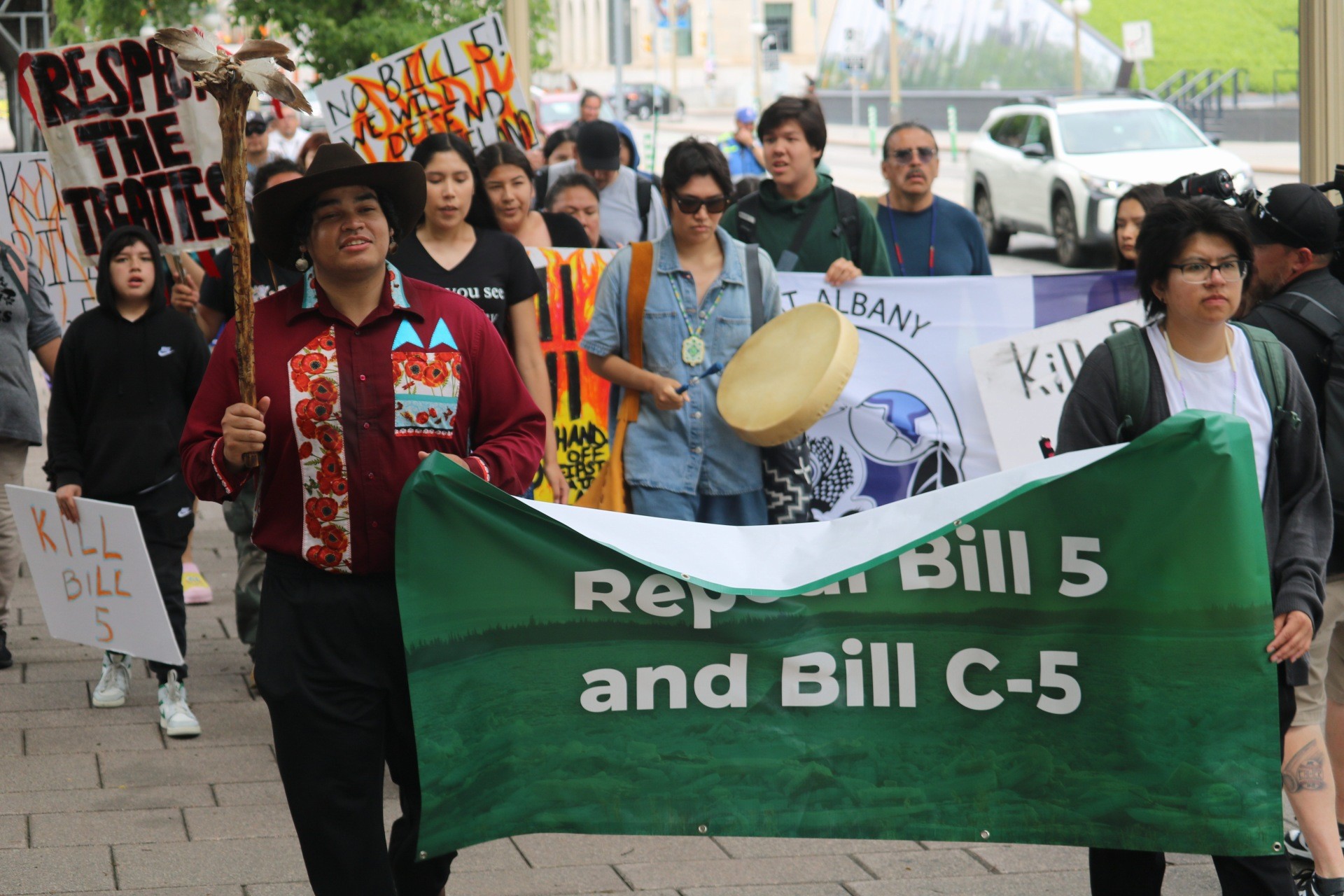
Speaking at a rally later in the day, youth representatives voiced their displeasure of not only Bill C-5, but also Ontario’s Bill 5, the Protect Ontario by Unleashing our Economy Act, 2025, also recently passed into law.
“These current bills are a continuation of the doctrine of discovery, a document that does not consider us human,” said Cedar Aisipi of Attawapiskat First Nation. “That is what these bills are. As a treaty rights holder, as someone with inherit rights, I reject Bill C-5 and Bill 5.”
She was joined by several youth leaders who also spoke at the rally.
“We all understand we can’t be silent. Silence has never gotten us anything as First Nation people,” said Kohen Chisel of Lac Seul First Nation. “So we will take the stand and fight for the land and fight for our rights and our way and we'll make ourselves heard.”
Despite the challenge of high wind and some rain, the protesters spoke to supporters.
“It isn't right for us to be legislated away and that is not something that is going to happen again in my lifetime because I come from a long line of assimilation, the same as many people that are standing here today,” said Ramon Kataquapit of Attawapiskat First Nation.
The youth protesters represented the groups Youth Rising Together, Urban Youth of Timmins, Mushkegowuk Youth Council and Assembly of 7 Generations. Another group is Mahmo Inninuwuk Wiibuseego-stamok, young First Nation walkers who are journeying by foot from Timmins to Toronto’s Queens Park to protest Bill 5 and Bill C-5.
Jeronimo Kataquapit was in the city to attend the meeting after leaving his wilderness protest of occupying the land along the Attawapiskat River for past 30 days with his family, brother Jonathan and their parents James Kataquapit and Monique Edwards.
Jeronimo initiated this protest against Ontario’s Bill 5 and Canada’s Bill C-5 as a way to help his community and members show government and developers that their people still actively occupy, live on and use the land. They’ve travelled 400 kilometers on the Attawapiskat River to set up a permanent camp on the site of river crossings where potential future major projects work may take place as part of the Ring of Fire mining development in this region. They are now working in cooperation with Neskantaga First Nation, which is located 100 km west of their camp.