
Image
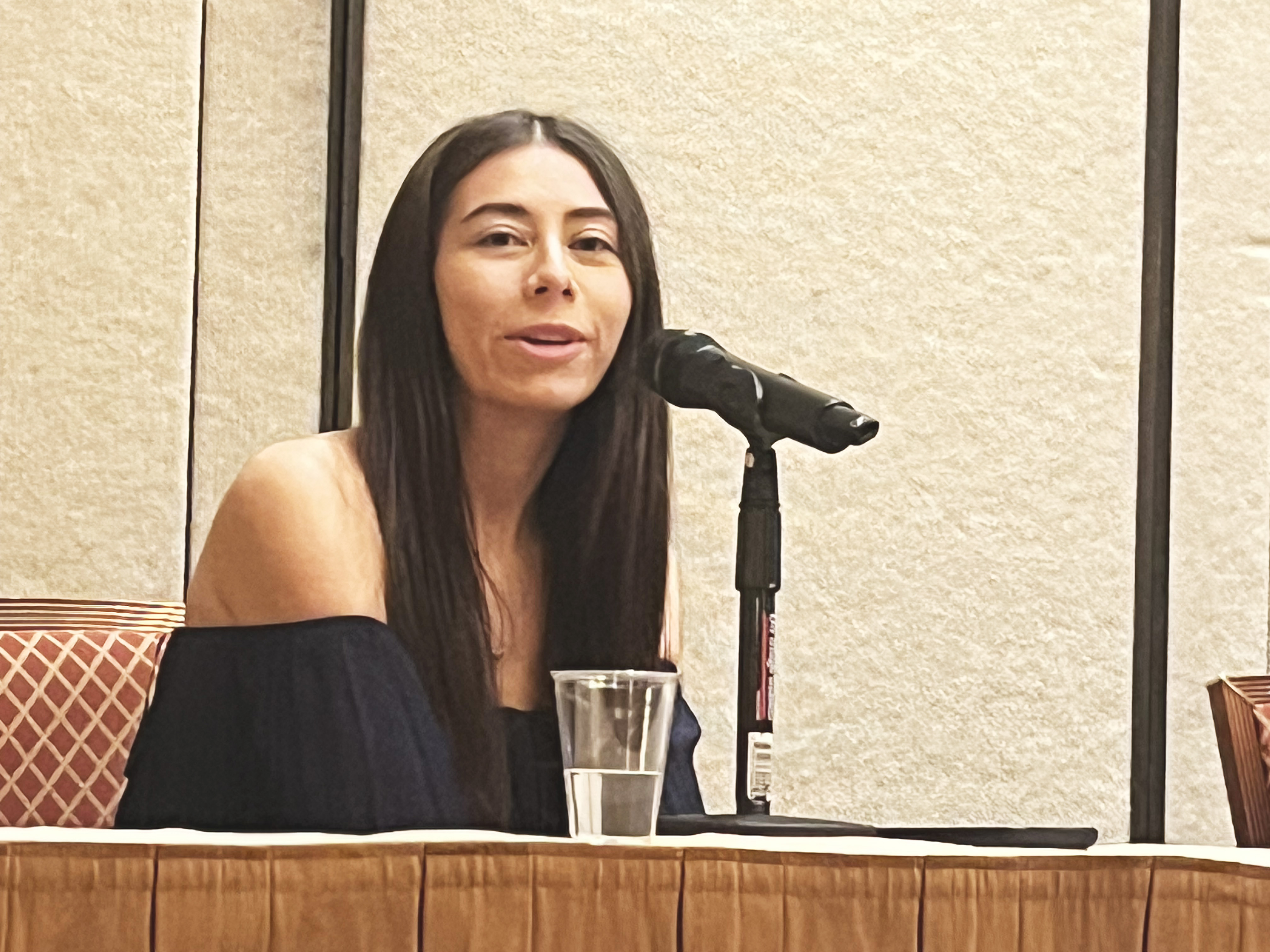
Image Caption
Local Journalism Initiative Reporter
Windspeaker.com
Chelsee Pettit has found herself once again in the spotlight at this year’s Reservation Economic Summit in Las Vegas.
Pettit, a member of Aamjiwnaang First Nation in southwestern Ontario, attended last year’s Summit where she was presented with the 2025 Native Woman Business Owner of the Year Award for aaniin Retail Inc., a company that she founded in 2021. It sells a variety of products made by other Indigenous entrepreneurs.
This year, Pettit was the featured speaker for a pair of sessions at the four-day Summit held at Caesars Palace. She was a speaker for a Women In Leadership fireside chat and for a session called “Resiliency Through Retail: Building Scalable E-commerce Systems for Indigenous Entrepreneurs.”
Utilizing her own business experience, Pettit said she is launching a Foundations First cohort model on May 1. She’ll be teaching other entrepreneurs on such topics as how to improve profit margins with feasible distribution deals and how to better support sustainable growth.
To be accepted into the cohort is for businesses to already be achieving at least $100,000 in sales.
Pettit believes she can help correct profit margins for businesses by at least 10 per cent by improving their distribution processes. She said that change is permanent and that some vendors she’s worked with have been able to increase their margins by 30 to 50 per cent.
“That’s drastic in terms of being able to keep that money and reinvest that into the business,” she said.
The goal is to bring into the cohort businesses from Canada and the United States.
“We're actually opening it up to all backgrounds,” Pettit said. “So, it's not just going to be an Indigenous cohort. The reason why I wanted to do that is a lot of the people that I've worked with over the last several years are not Indigenous community people.”
“Those are people from different walks of life and different perspectives that have allowed me to get into some of the groups that I've been getting into. So that's why we're opening up to everybody.”
The cohort is expected to last between three to six months. Pettit, explaining the difference in the length of the cohort period, said work with some business issues will take longer to address.
Pettit is hoping to sell 50 cohort spots, charging $10,000 (U.S.) for each. Pettit is being picky about who is accepted.
“We’re getting super intense with our vetting process now because we just want to actually be able to capacity build in the way that we want to,” she said.
“We need it to go exactly the way the system is built, because that is how you can quickly go through the system,” she said. “And it's just not going to benefit anybody if it's like taking us like two months to do this better or then eight months to do that better. It’s just is too inconsistent.”
“We're kind of at a pivot point where it's like we want people who have already made money because we can help them faster,” she said. “So, there's other resources and things that we can give to the people who are not ready for the cohort just yet.”
Pettit has an idea of which entrepreneurs are most likely to benefit.
“We're kind of at a transition stage where we did the first cohort,” she said. “We know what worked. We know what didn’t work.”
Having operated aaniin for the past five years, Pettit said she has a decent idea of what it takes to be successful.
Though her business has won several awards during the past few years, Pettit is closing aaniin to concentrate on other business ventures.
She doesn’t mind jumping into new initiatives, even if they may fail, because she deems failure to be a learning opportunity.
“I'll put myself through the fire because I really want to know how to get (something) out of it,” she said. “I just want to make sure other people don't just walk into it blindly.”
One thing that Pettit has learned is to value her own worth.
“I think this year the biggest thing that I'm like actually focusing on is I deserve to get paid.” She said this is an attitude that she has not always had in the past. Plus, she feels she can provide good advice.
“I have learned so many things,” she said. “I am able to help businesses get from point A to point Z, literally overnight pretty much. And I have so many skillsets in terms of being able to train and develop my staff, which are now actually doing the capacity building.”
Pettit said she differs from many entrepreneurs, who frequently hold themselves back from challenges.
“I don't think I have this gene,” she said. “I just go for it every single time.”
The annual Reservation Economic Summit, which concluded March 26, celebrated its 20th year and attracted more than 5,000 delegates. It is organized by the National Center for American Indian Enterprise Development.
More Foundations First cohort information can be found here: https://form.typeform.com/to/cWtB60ju