
Image
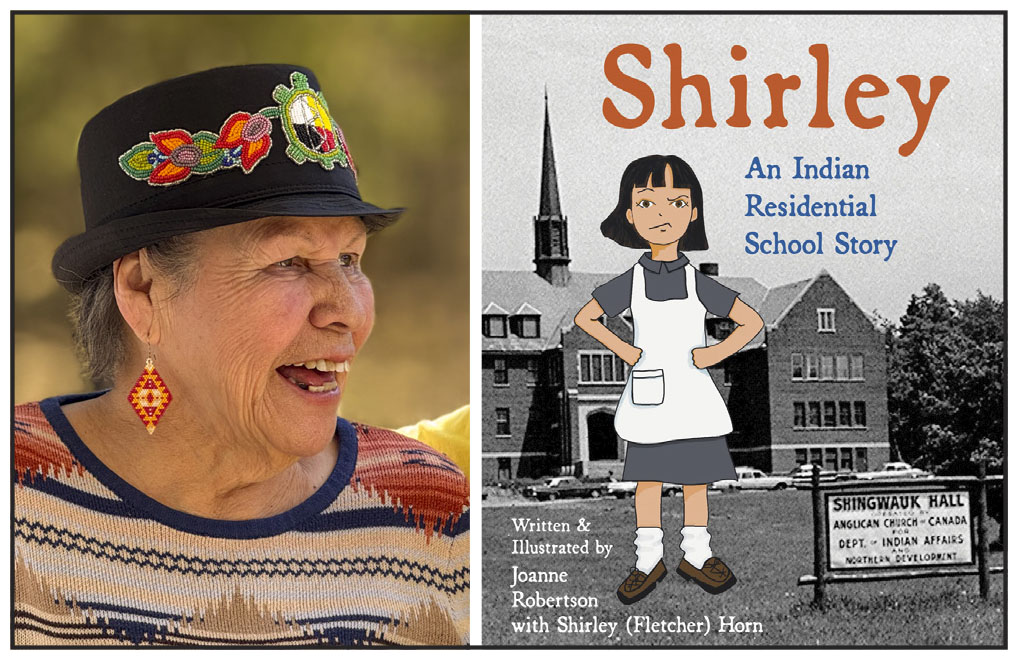
Image Caption
Windspeaker.com Books Feature Writer
Local Journalism Initiative Reporter
“When you're a child, you're not living in the past. You're not living in the future. You're living with your everyday people, everyday things that you do… We were so busy doing things and that was our salvation, I do believe,” said Shirley (Fletcher) Horn of her eight years attending two Indian residential schools in northern Ontario.
Shirley: An Indian Residential School Story captures the escapades of Horn who, along with her siblings, was taken from her home in Moose Factory to attend St. John’s (in Chapleau), first, and then Shingwauk (in Sault Ste. Marie) Indian residential schools, both operated by the Anglican Church.
Eighty-five years old now, Horn says it wasn’t difficult talking to writer and illustrator Joanne Robertson about that time at the schools. Horn says she has undertaken healing activities and has continued her work with the Children of Shingwauk, an organization that includes residential school survivors and their descendants.
It wasn’t difficult either, says Horn, to have earned her degree from Algoma University and then go on to serve as chancellor there for five years even though Algoma is the former Shingwauk Indian Residential School.
“The trepidation about being (at Algoma) was just for the first little while until I went in there, got used to it, met some people, talked with other students and so on. I was very happy to graduate from the university, being that was the institute where I spent a lot of my life,” said Horn, former chief of Missanabie Cree First Nation.
In Shirley, Horn focuses more on the fun she had in what was a lonely and hard situation.
Unable to interact with her siblings, she recounts in the book that she had “five special friends. We stuck together, and we became family.”
Even doing chores like laundry and cleaning at six in the morning became lively events.
“It was hard work, but we didn’t care as much if we made it a competition. This was how we survived. Daring each other to feel alive, we made our own joy,” recounts the book.
And then there was Shirley’s famous “Shingwauk Move” that she used on a school bully.
“I jumped up on her back before she did the same to me, and grabbed her by the shoulders, put my knee in her back, and took her down. We hit the ground hard, me on top of her. And that was that. Word spread fast about my Shingwauk Move.”
But there were times when young Shirley felt abandoned. When she was sick with 30 other kids, she writes, “No care was given. No kindness shown. There was no empathy and no hugs.”
She also recounts giving herself a “stern lecture” when one night she lay in bed crying because she missed her family. She asked herself, ‘Why are you crying? Why are you feeling sorry for yourself?’
“I dried up my tears and made myself think about other things,” recounts the book.
“When I was a child, I was a very high-spirited individual. Full of energy and wanting to explore, discover, learn and do all of those things,” said Horn, who admits she’s still that way. “I can't jump around like I used to. No more Shingwauk Moves. But still I'm enthused about the work that we're doing with Children of Shingwauk.”
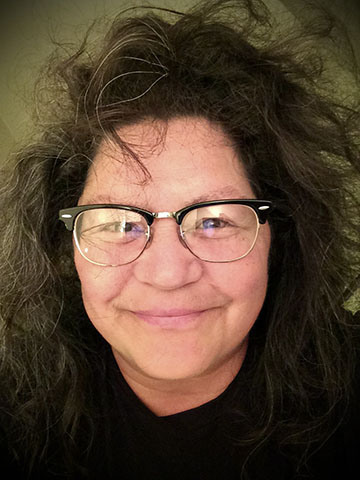
Author and illustrator Robertson, a long-time friend of Horn, says there was nothing Horn told her about her antics at the residential schools that surprised her.
“She's very bubbly and outgoing. So a lot of her stories that she told me were the good stories, because you get the good memories. So balancing that against the reality of the institution, that's what I found most difficult, because I didn't want to downplay that part of it,” said Robertson, who is a member of Atikameksheng Anishnawbek.
However, Robertson also wanted to be true to her friend’s experience.
“I realized that after talking to her many times about this, that she needed that humour in her life to get through all those difficult times. So, like she said, she was a child, and they used their childish ways to adapt and to figure it out as they went, right?.. They got into lots of shenanigans and stuff…Kids plan to do things like that,” she said.
Robertson gained that balance by using black and white archival photographs from the two residential schools and drawing Shirley, her family members, and other girls on those photographs. It was an approach Robertson saw used in another children’s book.
“I thought, ‘Oh, I'm going do it that way’ because …I thought it would add truth to her story,” said Robertson, who also noted that her style of illustrating wasn’t quite a perfect fit.
“I illustrate really cartoony. I did have a concern about my illustrations for such a serious time. I think the photos help with that.”
Horn hopes that other Indian residential school survivors will understand that her story comes from a person who has been on “my own healing journey through my adulthood and into my old age where I can change my mind about how I wish to feel about myself today. I'm not a child anymore, so I don't have to go there.”
Robertson would like survivors to give themselves permission to remember the enjoyment in what was a difficult time.
As for non-Indigenous readers, Horn wants them to understand that she didn’t have a “normal life” like they did but she still found “comfort and joy” in those with which she shared the Indian residential school experience.
Robertson hopes non-Indigenous readers are motivated to find out more about Indian residential schools and understand how those schools continue to impact the generations that have followed.
Shirley: An Indian Residential School Story is published by Second Story Press and will be released Feb. 10. It can be purchased at https://www.amazon.ca/Shirley-Indian-Residential-School-Story/dp/177260…