
Image
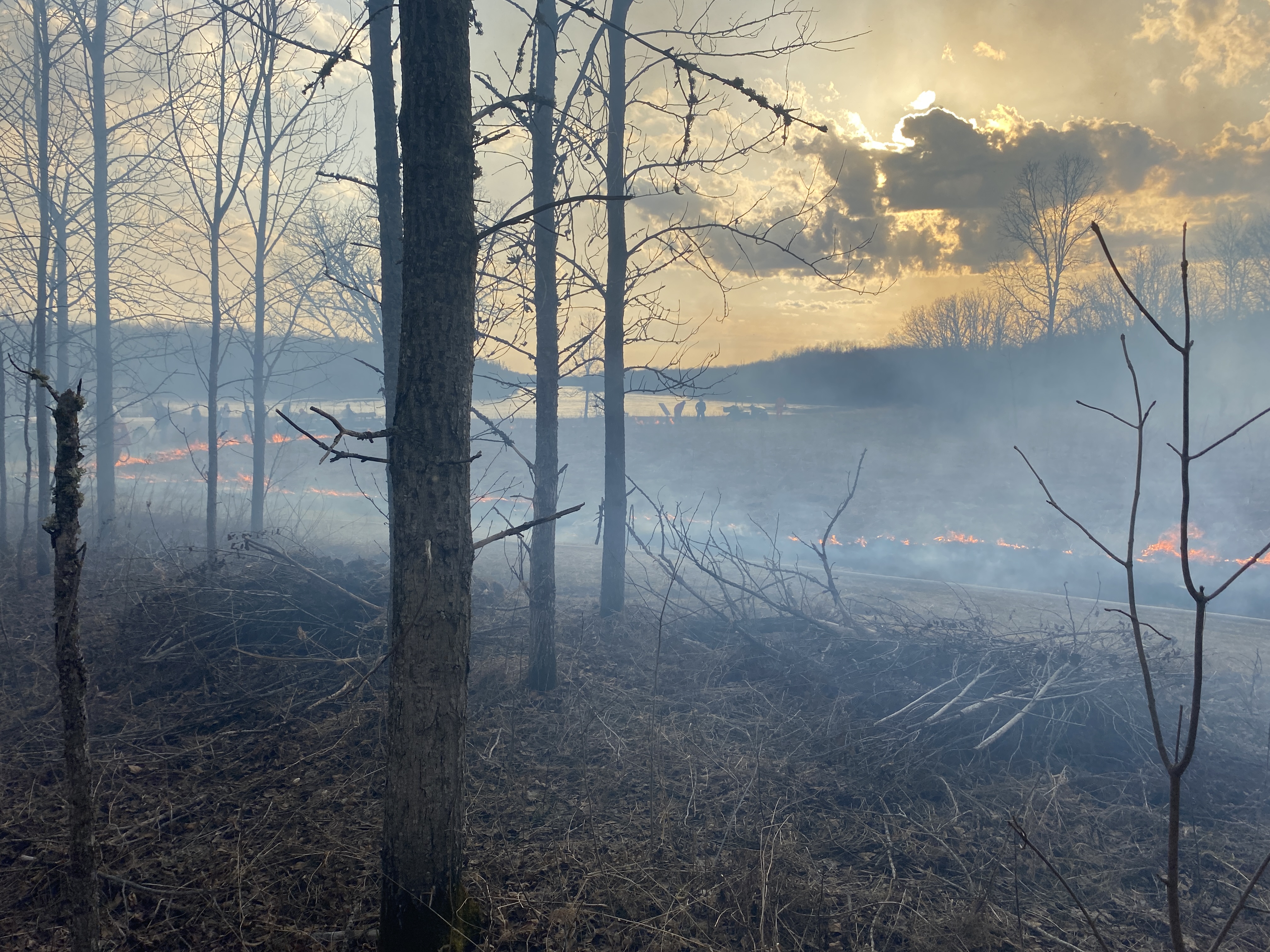
Image Caption
Local Journalism Initiative Reporter
Windspeaker.com
Earthwork opens today, Sept. 4, at the Art Museum at the University of Toronto. It is the first major exhibit curated by Mikinaak Migwans, an Anishinaabekwe from Wikwemikong Unceded First Nation. Migwans is curator of Indigenous Contemporary Art at the Art Museum and assistant professor in the Department of Art History at the university.
Inspiration for Earthwork came from Migwans’ interpretation of Indigenous beadwork, which refers to a way of working together rather than a singular object. They then reframed the idea into artwork of the land.
“Earthwork includes nine Indigenous artists, art collectives or activist collectives, and they're all thinking about ways that we can think about relating to Earth outside of the idea of resources or material, something more along the lines of having a relationship with the earth or with the elements,” said Migwans.
Artists and collectives included are Alex Jacobs-Blum, Art Hunter, BUSH Gallery, Edward Poitras, Faye HeavyShield, Lisa Myers, Michael Belmore, Mike MacDonald and Protect the Tract Collective.
In the 1960s and ‘70s there was an art movement that popularized Minimalist and Land Art. Earthwork captures the term through an Indigenous lens, building on traditional and modern community practices and art. The exhibit showcases the ways communities from across Canada have engaged with the land, including defense movements, plant cultivation and ancestral prescribed burns.
Kay-Nah-Chi-Wah-Nung Historical Centre is a national historic site and one of the most significant places of early habitation and ceremonial burial in Canada. Art Hunter of the Rainy River First Nations in Ontario documents through a series of photographs Indigenous land stewardship through a controlled burn at this cultural site.
These burns are deeply tied to Indigenous peoples’ ancestral way of life.
“They (the Rainy River First Nations) have something called a Prairie Oaks Savannah, which is an ancestral kind of landscape that was maintained through controlled burning,” explained Migwans. “It makes the land so that it's a good environment for medicines to grow for certain plants and animals that are partners to humans to flourish.”
Another significance of this particular site is it is home to a number of traditional burial mounds.
“It’s a very beautiful site,” said Hunter. “It has a unique ecosystem… It’s a very unique, actually an endangered ecosystem… because of settlement and fire suppression and farming, things that really kind of wiped it out.”
There are15 burial mounds at the site, the largest being about 25 ft in height.
“They’re huge. They hold many, many, many burials there. Over 2,000 years ago, the people buried their loved ones in what we call bundles,” said Hunter. “It was only the bones wrapped up in animal hide or birch bark. There was also fetal position burials. They would wrap them in fetal positions and then put them in the burial mound, and it was built up over hundreds and hundreds of years.”
Eventually grass and other plants grew over it. Traditionally, the community would burn away these elements, which would help nourish the soil resulting in the plants flourishing next season.
“It would also aid in keeping invasive species from encroaching on the Savannah,” added Hunter.
Edward Poitras’s work revolves around the story of Lake Diefenbaker, which was formed through construction of the Gardiner Dam and the Qu'Appelle River Dam in southern Saskatchewan.
“That is a man-made lake that was the result of a hydroelectricity project,” explained Migwans.
Before the lake was created, there was a large boulder that was used as a wave marker in Saskatchewan up until the 1960s. “Because this boulder, this Indigenous monument, was in the way of this hydro project there were protests about it and they were going to delay the project, but the government decided to blow up the stone,” said Migwans. “They reduced it to rubble, and the lake went ahead, and the stone is under the water.”
Poitras’ work focuses on Indigenous infrastructures and monuments, examining relationships with the earth that were kind of sacrificed for settler infrastructure, for hydroelectric dams or roads, for churches or residential schools, said Migwans.
Migwans hopes visitors of the exhibit will “get an idea that relationships with the earth are something that has a lot of work put into them, the people who do, who are, what I call earth workers.”
“They put a lot of time and effort into maintaining good relationships with the land and it does take a lot of doing, so I want people to come away with an appreciation of all that work,” Migwans said.
A second show opening today at the Art Museum is Dwelling Under Distant Suns, which also focuses on the environment and the struggle of environmental violence that occurs over time.
“It’s sort of rooted in the experiences of Southeast Asia,” explained curator Yantong Li. The exhibit features the work of Kent Chan, Alvin Luong and Solveig Qu Suess.
It brings to the forefront the climate crisis, how the media portrays these environmental challenges, and geopolitical issues of the past, present and future.
Li said he hopes visitors will see the parallels between Earthwork and Dwelling Under Distant Suns.
He said he wants them to “try to relate to issues across geography, to see these sorts of shared struggles across sites.”
For more information about the exhibits or artists visit www.artmuseum.utoronto.ca. Runs until Dec. 20.