
Image
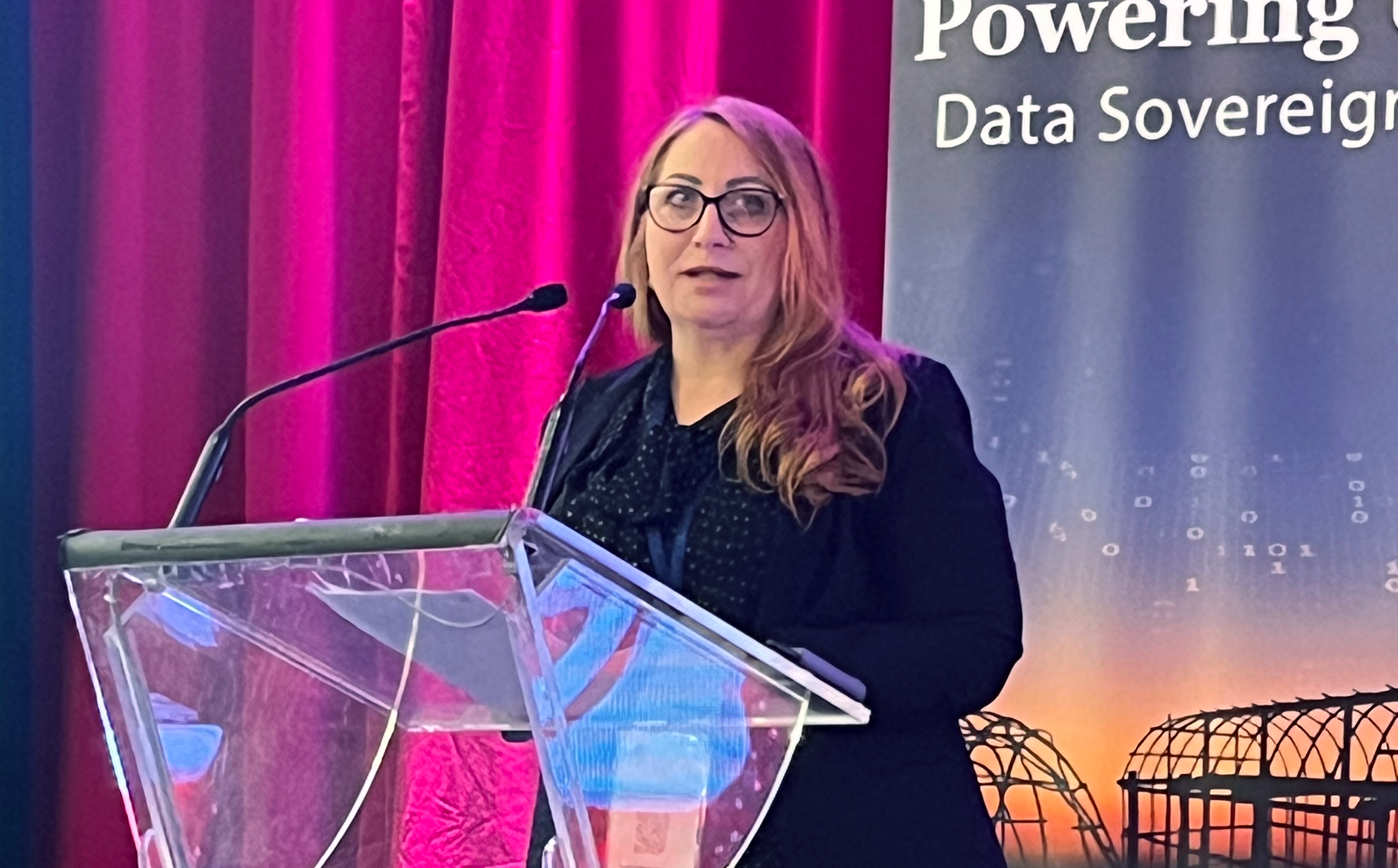
Image Caption
Local Journalism Initiative Reporter
Windspeaker.com
As a policy analyst with the Sioux Lookout First Nations Health Authority, Steffanie Petroni is doing her best to further the work of the northern Ontario organization, but she’s facing challenges.
The health authority serves as the data steward for 33 First Nations. It supports these communities on their wellness paths by contributing to a strong health system.
Petroni was a speaker at the Chiefs of Ontario Powering Up Data Sovereignty conference held in Toronto. The three-day event began on May 12 and wraps up May 14. Her opening-day session was titled Community-Level Initiatives: Challenges, Solutions and Innovations.
Petroni said First Nations have the right to access their own data in order to make informed decisions about their health and wellbeing. She said when access is delayed or denied, it affects a community’s ability to plan, respond, promote and protect health.
The health authority operates under the OCAP (Ownership, Control, Access and Possession) set of principles, which details how First Nations data and information should be collected, protected, used or shared.
“However, in practice, these principles are not fully realized,” Petroni said.
“Ownership is acknowledged but not always operationalized. Control is constrained by external processes and approvals. Access is conditional and often delayed. And possession remains limited with data largely held outside of First Nations systems. In our organization these structural dynamics translate into everyday operational challenges.”
Petroni said these challenges are not only frustrating but time consuming for staff members.
“We are repeatedly drafting data sharing agreements, engaging in ongoing communication cycles and navigating multiple external data sharing processes,” she said.
“From an OCAP perspective, this limits timely access, community-driven use and the ability to fully exercise control. However, at the community level, the impact is far more serious.”
That’s because barriers to data access translate into gaps in community knowledge, planning and response.
“When access to data is delayed, incomplete or inconsistent, communities are left without a clear picture of their own realities,” she said. “This has several implications. First, it limits the ability to make informed, proactive decisions. Without access to reliable data, planning is reactive, rather than preventative. Community leaders are relying on partial information to make decisions and opportunities for early intervention may be missed.”
Petroni said when First Nations encounter barriers to their own data, that also impacts trust and engagement.
“When communities are aware that data has been collected about them, but experience difficulty accessing it … First Nations may question how data has been used, who it is serving, and whether it is ultimately benefitting their community,” she said.
Government interference and red tape often leads to less-than-ideal conditions.
“In effect, communities are making decisions with less information than the systems that govern them,” she said.
Petroni said several practical steps can help address these issues. For example, she believes First Nations organizations should have data stewardship that gives them governing authority.
“This would shift the relationship from external requester to a rights-based partner,” she said.
She’s also in favour of standardizing data-sharing agreements to provide more clarity.
“These agreements would define accountability, support consistency and reduce delays,” she said.
Petroni believes that change is possible.
“Bridging this gap requires not just legal clarity but a realignment in how authority is understood and applied,” she said. “And that realignment is both possible and necessary. This is not a question of changing the law. It is a question of changing how a law is applied. And until that changes, First Nations data sovereignty will remain permitted but not fully realized.”