
Image
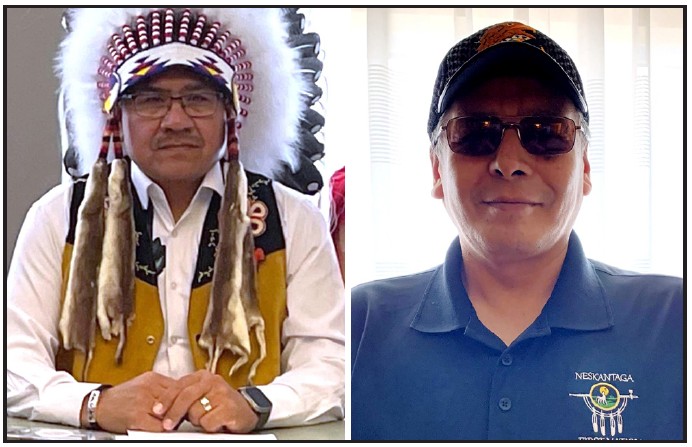
Image Caption
Local Journalism Initiative Reporter
Windspeaker.com
As First Nations leaders challenge one of Canada’s largest proposed artificial intelligence data centres over its potential impact on fresh water, many say Ottawa’s newly introduced clean water legislation leaves a fundamental question unanswered: Who ultimately decides what happens to waters in First Nations territory?
The federal government says Bill C-37, the proposed First Nations Clean Water Act, would recognize First Nations’ jurisdiction over water on First Nation lands while establishing enforceable drinking water standards, a First Nations-led water commission, and a long-term funding framework backed by a $4.6-billion investment. The bill replaces Bill C-61, which died on the Order Paper when Parliament was prorogued ahead of last year’s federal election.
Several First Nations leaders, however, say the legislation will ultimately be judged by whether it changes who decides what happens to First Nations waters, a debate already playing out in northern Alberta.
Sturgeon Lake Cree Nation is before the courts challenging Alberta’s decision to issue a Water Act licence connected to the proposed Wonder Valley AI data centre within Sturgeon Lake Cree Nation traditional territory, a project expected to require billions of litres of water annually if constructed. The Nation argues the province failed to meet its duty to consult before approving the licence.
Sturgeon Lake Cree Nation Chief Sheldon Sunshine said the dispute illustrates why First Nations’ jurisdiction over water cannot stop at recognition alone.
“The proposed Wonder Valley project and the ‘heat island’ it will create would fundamentally change our lands forever, including its massive emissions and vast amounts of water in an area continuously devastated by wildfires and drought,” Sunshine told Windspeaker.
“The company’s own estimate is six billion litres of water each year, and yet the Government of Alberta waived the environmental impact assessment. Human beings need water. Data centres should not be taking it from our own mouths,” he said.
The case has become a real-world test of the question now facing Parliament: If provinces continue approving major industrial water licences, what practical authority would Bill C-37 give First Nations seeking to protect their waters?
The federal government says the bill would advance the human right to safe drinking water and establish legally enforceable standards that do not currently exist.
Responding to Windspeaker’s questions, the Ministry of Indigenous Services Canada (ISC) said protecting drinking water also requires protecting its sources.
“First Nations have been clear that protecting drinking water begins with protecting the sources of that water. Bill C-37 affirms First Nations’ inherent right and jurisdiction over water on, in, and under their lands,” said ISC.
Sunshine disagreed.
“Bill C-37 took a significant step back by softening the federal commitment to First Nations’ rights to water,” Sunshine said. “Without firm and clear support of our inherent and treaty rights to our lands and waters, there is an opportunity for Alberta’s UCP government to continue its sidestepping of treaty to bend over backwards to accommodate industry and commercial interests.”
He said meaningful jurisdiction means recognizing First Nations as governments whose consent — not simply consultation — is required before projects affecting their waters proceed.
“Meaningful First Nations’ jurisdiction is about honouring the treaty covenant by recognizing our absolute jurisdiction to protect our waters, like the Smoky River and Sturgeon Lake, from the devastating effects of industry and climate change,” Sunshine said. “First Nations are not ‘stakeholders’ to consult, but Nations who require consent. Canada and Alberta are acting without good faith and dishonouring the Crown.”
Sunshine also questioned the federal government’s consultation on Bill C-37 itself.
“It’s been disappointing and disrespectful to see the bill tabled without even a prior conversation,” he said. “Just yesterday, June 24, we received the first communication from ISC related to the bill — a week after it was introduced publicly. It’s a back door process that disregards the jointly signed Treaty Bilateral Table on Water and Related Infrastructure.”
The minister’s office disputed suggestions the bill was developed without meaningful consultation.
“This legislation is the result of more than six years of consultation and engagement with First Nations, including hundreds of meetings with chiefs, Elders, water operators, technical experts, rights holders and community members,” the ISC office said.
Concerns extend beyond Alberta. National Chief Cindy Woodhouse Nepinak of the Assembly of First Nations, the national advocacy organization for First Nations across Canada, said the legislation requires significant improvements through direct engagement, citing concerns about source water protection, sustainable funding, and the definition of First Nations lands.
The Anishinabek Nation also argued that Bill C-37 departs from the collaborative process used during work on Bill C-61, saying important changes were made without meaningful consultation and warning the bill risks undermining self-determination.
For Neskantaga First Nation Chief Gary Quisess, however, the debate is inseparable from lived experience.
His community in northern Ontario has been under a boil-water advisory for more than 31 years — the longest current advisory in Canada — despite repeated federal commitments to improve drinking water infrastructure in First Nations communities.
“Right now, we’re not too happy with Bill C-37 because we’ve been living in the boil water advisory for 31 years,” Quisess said. “We’ve been going through five prime ministers (who are) supposed to help the community have clean drinking water.”
He said the proposed legislation arrives as the community continues to struggle with inadequate infrastructure while facing increasing pressures from Ring of Fire mining developments on its traditional territory.
“The main concern is our health,” he said. “The other concern is what the province is doing by pushing development in our area without considering our community and its basic human right to clean drinking water.”
Quisess said his Nation continues to defend lands and waters that remain central to its identity.
“The land is actually us,” he said. “We live from it. It’s our culture. When we speak, that’s our language.”
Wayne Moonias, an advisor to Neskantaga’s chief and council, said the legislation reflects a broader pattern in which governments make decisions affecting First Nations before meaningful discussions take place.
“The community hasn’t been meaningfully involved or consulted, and it seems that’s become a common experience when we’re dealing with government,” Moonias said. “When the government introduces a bill that’s supposed to improve the lives of our people, but does so with little or no involvement from First Nations, it’s become typical.”
Moonias said communities such as Neskantaga continue to face overlapping crises beyond access to clean drinking water, including health, addictions and mental health challenges, while governments focus on new legislation.
“Neskantaga, in our view, is ground zero when it comes to the lack of clean, safe drinking water in any part of this rich country that we call Canada,” he said. “Our chief here is still trying to advocate and trying to figure out how we’re going to get a new water treatment plant (and) how we’re going to ensure that (water from) the taps in our homes is drinkable.”
Quisess said years of meetings with successive governments have yielded few tangible results.
“We’ve been having continuous meetings, but there’s been no movement,” he said. “There have been a lot of commitments, but no action. … Until I see action happening in the community, they’re just words again.”
Asked whether Bill C-37 appears likely to change that reality, Quisess remained unconvinced.
“I don’t see it right now,” he said.
That skepticism is echoed by several First Nations organizations that responded following the introduction of Bill C-37.
In Alberta, the Chiefs Steering Committee on Technical Services said the federal government advanced the legislation without adequately engaging treaty leadership. The organization called for renewed nation-to-nation discussions through the Treaty Bilateral Table on Water and Related Infrastructure and argued the proposed legislation does not sufficiently recognize treaty jurisdiction over water or provide adequate long-term funding.
While organizations raise distinct concerns, a common theme has emerged: Recognition of First Nations jurisdiction means little, they argue, if governments retain ultimate decision-making authority over the waters First Nations communities depend upon.
“Bill C-37 closes the long-standing regulatory gap that exists only on First Nations lands,” the ISC office said.
For Sunshine, that question extends beyond a single Alberta court case. He said disputes such as Wonder Valley demonstrate why First Nations jurisdiction must be recognized before governments authorize projects with long-term impacts on water.
“Wonder Valley has not met its obligations in the slightest, not only in terms of First Nations’ consultation and consent, but to all Albertans,” he said. “Water doesn’t respect political borders; it flows where it has always flowed and we need to protect it for the future, not for AI chatbots.”
As Parliament prepares to study Bill C-37, First Nations leaders say the question is whether governments will continue approving projects that affect their waters, or whether First Nations’ jurisdiction will carry practical weight when those decisions are made.