
Image
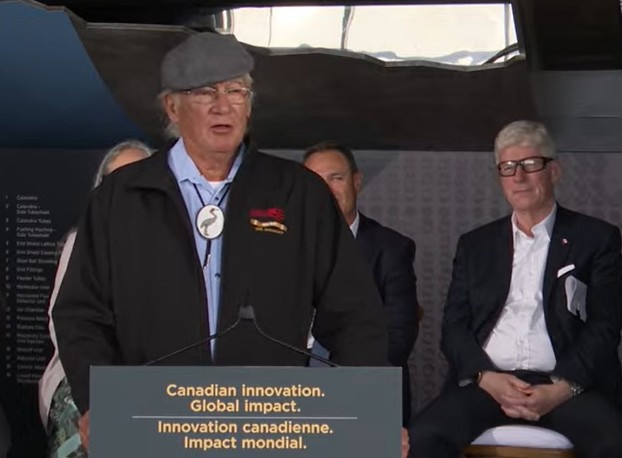
Image Caption
“It’s a feel-good story, because this particular initiative does save lives,” said former chief and now councillor Greg Nadjiwon of the Chippewas of Nawash Unceded First Nations.
He was speaking at today’s announcement of an investment by Canada in the expansion of the production of lutetium-177, a cancer-fighting medical isotope produced by Bruce Power, a nuclear power plant in southwestern Ontario. It’s a commercial venture that would supply needed isotopes to global markets while securing Canada’s domestic supply.
The Saugeen Ojibway Nation (SON) is an economic partner in the initiative through Gamzook'aamin aakoziwin, Fighting Cancer Together, established in 2021. Bruce Power operates on the traditional territory of SON, made up of the Chippewas of Nawash and Saugeen First Nation.
“This has been quite a trip and a journey,” said Nadjiwon, as he described the involvement of SON in the production of lutetium-177, a partnership that will continue to build the “economic foundation” of the nations.
It started out as a dream, he said, but it’s something that will “take flight.”
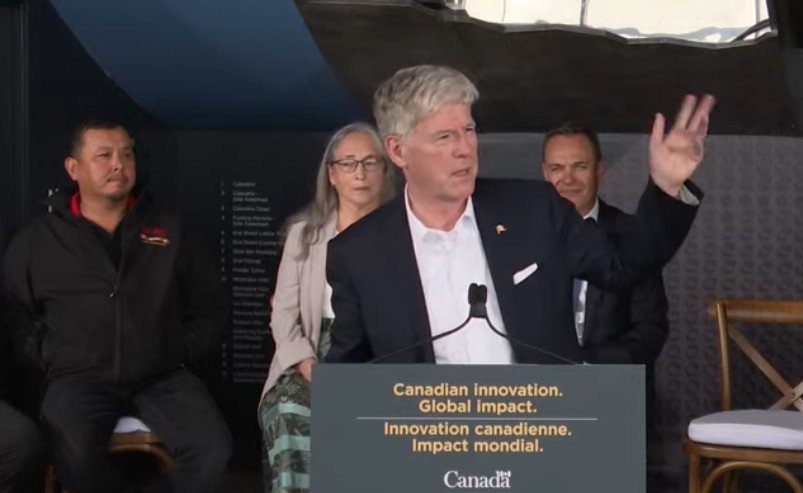
Tim Hodgson, minister of Energy and Natural Resources, on behalf of Mélanie Joly, minister of Industry, pledged $13 million to support a second isotope production system at Bruce Power’s CANDU Unit 6 reactor. Bruce Power began its production of isotopes in Unit 7 in 2002, said Bruce Power President and CEO Eric Chassard.
Lutetium-177 is a new therapy that delivers targeted doses of radiation directly to cancer cells while minimizing potential side effects on healthy cells.
“It’s not just an investment in new technology. It’s an investment in life,” said Hodgson.
Ontario hopes to double medical isotope production by 2030, “driven in part by the expansion at Unit 6, enabling 24/7 production of cancer-fighting isotopes for Canadians and people around the world,” said Stephen Lecce, Ontario Minister of Energy and Mines, in a press statement.
“With the global isotope market expected to grow from just over 13 billion Canadian dollars a year to over 45 billion Canadian dollars a year in the next decade, Canada has a unique opportunity to lead and prosper, not just as a supplier, but as a superpower in energy and health innovation,” said Hodgson.
As the minister of Energy, Hodgson said he is committed to investing in nuclear infrastructure.
“Nuclear energy is an important part of our energy mix and will be key to ensuring energy security, driving economic growth and reducing emissions in our retooled economy of the future.”
The isotopes mean faster and more accurate diagnoses, more effective and less invasive cancer treatments, and expanded access to advanced health care, Hodgson said.
Isotopes help sterilize medical equipment, improve medical imaging, and promote research and development of new medical treatment technologies.
The investment will help secure Canada’s domestic production by reducing reliance on imports in volatile global markets, said the minister.
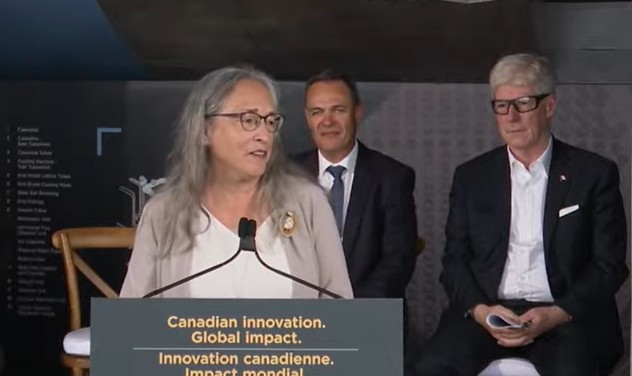
Also speaking at the press conference were new Chief Darlene Johnston of the Chippewas of Nawash, and Chief Conrad Ritchie of Saugeen First Nation.
Chief Johnston described a patient whose chemotherapy wasn’t successful in treating his brain tumors, and was among the first to receive treatment with the new isotope therapy. She said it will dramatically increase his chances of beating brain cancer.

Chief Ritchie stressed the importance of the Gamzook'aamin aakoziwin partnership, which he said demonstrated “coming together for something good for all people” by “blending our knowledge base” with the knowledge of the western world.