
Image
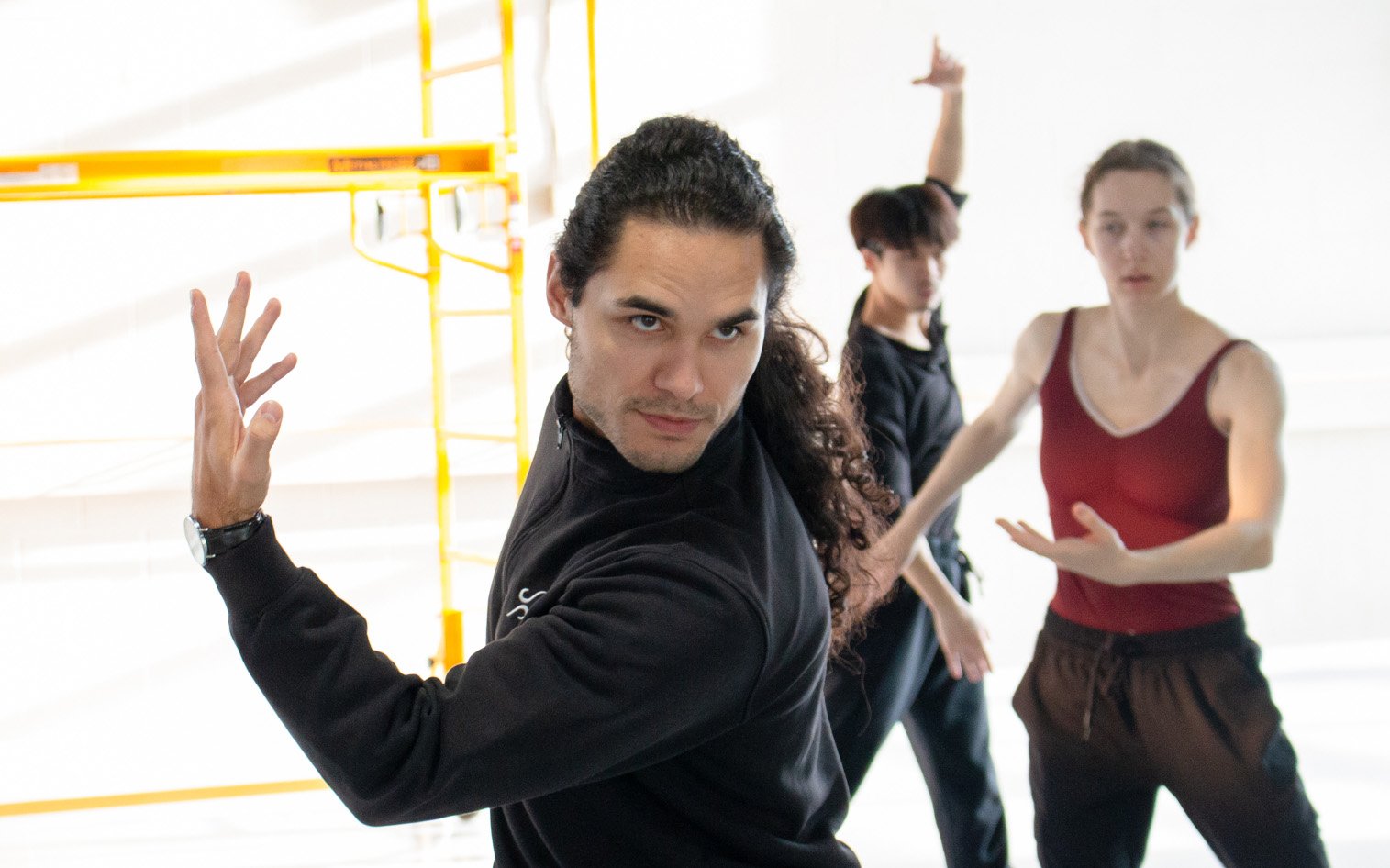
Image Caption
Local Journalism Initiative Reporter
Windspeaker.com
Cikilaxʷm: Controlled Burn, a full-length narrative contemporary ballet, will be presented by Ballet Kelowna May 1 and May 2 at the Kelowna Community Theatre.
The original piece by Cameron sinkʷə Fraser-Monroe explores Indigenous fire stewardship and cikilaxʷm, meaning prescribed fires, related to the restoration of the land and community through traditional practices.
“We have been working with Cameron since 2021 when we commissioned the first piece from him for Ballet Kelowna called taqəš,” said Simone Orlando, artistic director and CEO.
“Cameron has worked closely as an artist-in-residence for our 20th anniversary season and there were a couple of other works that were developed during that year and he has continued as our associate artist.”
Cikilaxʷm: Controlled Burn is the fifth piece Fraser-Munroe has created for the Ballet Kelowna and represents the second full-length ballet commission.
Fraser-Monroe is a member of the Tla'amin First Nation in B.C. He trained and performed with world champion hoop dancer Dallas Arcand and studied grass dance with Elder Mollie Bono. Fraser-Monroe graduated from the Royal Winnipeg Ballet School and for the past five years has served as artistic director of the Winnipeg Summer Dance Collective.
Cikilaxʷm: Controlled Burn is set in a dystopian future where wildfire season never ends. It follows a young Indigenous firefighter whose beliefs are challenged when he meets a knowledge keeper who practices cultural burns.
“I think what’s really amazing about this piece is that the central conflict behind it is colonial fire suppression versus Indigenous control burns,” Orlando said.
Fraser-Munroe’s interest in writing the ballet was sparked after attending the National Indigenous Fire Gathering in Penticton, B.C. where he met a resident of Alaska who spoke about controlled burns.
“(He) talked about how controlled burns in his territory had the potential to not only save his territory but actually could have an impact globally in terms of the land he was protecting,” said Fraser-Monroe. “That was why I was interested in this work.”
The message he portrays in the ballet is how there is “a light at the end of the tunnel” and a solution to the issue of wildfires that are getting worse every year.
“And that’s the Indigenous right to steward. That’s the right to practice this knowledge that we’ve carried for thousands of years on the land,” he said.
The main character in the ballet has two forces pulling him in two different directions.
“One is the fire chief who is putting out the fire, suppressing the fire, and the other is Mosqua, who’s tending the fire, keeping the fire, using it as a tool and a collaborator,” Fraser-Munroe explained.
“That’s what the work is centered on, those relationships between people and this young man finding his way through this world and coping with this kind of climate disaster.”
Partnering with BC Wildfire, Fraser-Munroe was provided actual footage of the lands around the Okanagan territory and wildfires from the Kelowna area to use in the production.
“That’s a big part of the grounding of this work is the ability to transport audiences into the forest and onto these lines,” he said. “But one thing I will point out, too, is we’re not trying to re-traumatize people that have come across wildfires or have lost their homes or been displaced by it.”
He said he wanted to create a space where those feelings could be processed. In the staging he used only a small number of clips from the fires.
“We don’t actually spend a lot of time looking at fire. We’re much more interested in the relationship to fire,” he said.
“I think that it’s interesting to see science catching up to that traditional knowledge; that if we care for the land and we practice these burns, we do have a reduction in the risk of wildfire… The fact that some of our forests are meant to burn every 20 years.”
He explained how trees are prepared and built for wildfires, but because fires are put out year after year, the fuel in the forests build up.
And the reason for this is because people are still afraid of fire. “People still call in when they smell smoke” and so that was a big part of the ballet, approaching the relationship to fire.
“Because, intellectually, you might understand that controlled burns are a good thing, but you still need to overcome the fear of fire in order for them to be practiced,” Fraser-Munroe added.
The behind the scenes team at Ballet Kelowna is an Indigenous-led group that includes Andy Morrow and Rylee Block (production design), Cris Derksen (composer), and costume design by Asa Benally.
“I'm working a lot behind the scenes in terms of marketing the work, as well as working on community engagement, and then assisting with things like costumes, rehearsals with the dancers, the lighting elements, and making sure that we have schedules and a full team of people to help us transition the work into (Kelowna Community Theatre),” Orlando explained.
In an effort to make this performance accessible to the public, there are All My Relations tickets available for a cost of $18 each for anyone from the Indigenous community. They are available at https://www.theboxoffice.ca/upcoming-events/ballet-kelowna-presents-cikilaxwm-controlled-burn
“We're extending an invitation to the Indigenous community and hoping that they might come out and see the show, and we'll be there with open arms,” Orlando said.