
Image
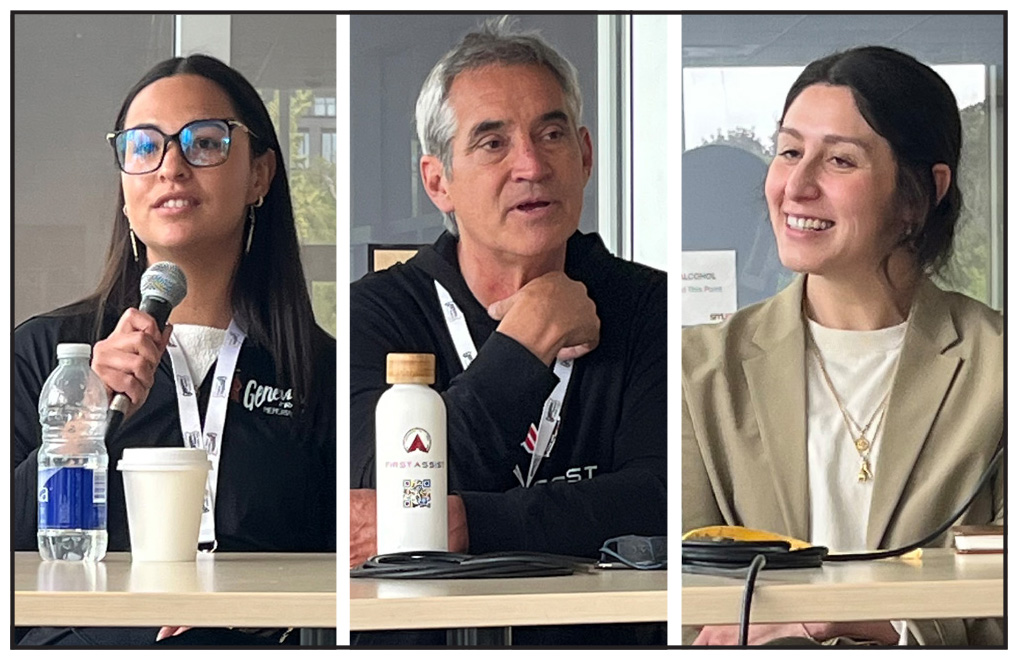
Image Caption
Local Journalism Initiative Reporter
Windspeaker.com
Though he retired from the professional hockey ranks 25 years ago, John Chabot is still heavily involved in the sport.
Chabot, a member of Kitigan Zibi Anishinabeg First Nation in Quebec, appeared in 541 National Hockey League contests. He played for the Montreal Canadiens, Pittsburgh Penguins and Detroit Red Wings.
Chabot also played 10 seasons of pro hockey in Europe, suiting up for clubs in Italy, Switzerland and Germany, before retiring in 2001.
After his playing days were done, Chabot founded First Assist, a charity whose mission it is to encourage Indigenous student success in large part via sports programming. Chabot and other First Assist representatives frequently travel to northern communities in Canada and utilize sport as a motivational tool to urge school attendance, promote healthy lifestyle habits and boost classroom engagement.
Chabot attended the Indigenous Girls’ and Women’s Hockey Gathering held May 29 and May 30 at St. Mary’s University in Halifax. He was one of three panelists for a session titled Indigenous Hockey Programs.
“We want to create opportunity for kids that sometimes are overlooked and marginalized,” he said. “And the best way we do it is by getting in a community and trying to change minds and trying to change outlooks and trying to change lives,” Chabot said.
“Success is measured completely different. But we know we're doing the right thing. And I think we all feel the same thing. It's not about money. It’s about making a difference.”
While other hockey camps do their best to improve players’ on-ice performances, that’s not what First Assist is about.
“We’re not creating hockey players,” Chabot said. “We’re creating good kids, good people with a chance to make a decision based on what's best for them. And so far, it's been good. And we hope to continue that.”
Chabot has insisted that First Assist primarily works with remote northern communities as they often do not receive as much attention as other centres across the country.
“It is not about the sport,” Chabot added. “It's about a relationship that we create with the community. Every community that we go to has to have a like-minded approach to sport and to life. We don't want to force anything on a community. Everything we do is in consultation, communication and what the community wants.”
Chabot said he is keen to make a difference.
“We're not trying to change the world,” he said. “We're trying to change the lives of young kids.
One kid is not enough. We want to change kids in every community.”
Since First Assist’s inception, the program has been an inclusive one.
“We just want to make sure that the kids understand that hockey is a great sport,” Chabot said. “It's a way to make friends and make all feel good. And it can be used as a tool to get you where you want to go with your life.”
The Indigenous Hockey Program panel also included Sydney Daniels and Jana Headrick.
Daniels, a member of Mistawasis Nêhiyawak, a First Nation in Saskatchewan, is a former captain of the Harvard University women’s hockey team in Massachusetts.
Along with her father Scott, a former NHL player, she operates Daniels Hockey camps.
Headrick, a member of Garden River First Nation in Ontario, is a former player who began her collegiate career at the University of Toronto before transferring to the University of New Brunswick (UNB). She is one of five siblings in her family involved in hockey.
Though her brothers and sisters have operated or assisted at various camps over the years, they are now joining forces to run a family business called Headrick Hockey.
Daniels, who played at Harvard from 2013 to 2017, launched her hockey camp business with her family while she was still at university.
“The first camp we had about 12 skaters,” she said. “And I think eight of them were my cousins.”
But then word of the Daniels camps started getting out.
“We had this magical moment where the community got behind it and we got more communities involved,” she said. “And we started building these deep and authentic and real relationships with them. And we were teaching kids how to skate. We were teaching kids the fundamentals. It was a lot of investment on both sides.”
Daniels shared a story of a camp several years ago when she found out a young participant was bereft because his father had taken his own life the day before. But when the youngster was asked if he wanted to be excused, he said the only place he wanted to be was on the ice with Sydney and her father.
“It's those little moments of knowing that you are making an impact even in the slightest way possible,” Daniels said. “That just continues to drive us forward and continuing to do what we do because we see how much it is needed.”
As for Headrick, she talked about how a sibling-run hockey business was slowly being launched.
“It kind of came together organically,” she said. “We found ourselves doing and starting programs like these in all areas of the country.”
Three of her siblings are still playing at elite levels. Her oldest brother Owen is playing professionally in Germany while younger brother Evan is a member of the Pennsylvania-based Erie Otters in the Ontario Hockey League. Sister Mya has one year of collegiate eligibility remaining with UNB. And brother Nathan, who is now 24, made it to the Junior A ranks.
“Right now, we’re kind of in the planning stages,” Jana said of her family’s camps. “We’re kind of using communities that reach out to us and we’re taking those opportunities to support them and we’re trying to figure out what’s the best way forward.”