
Image
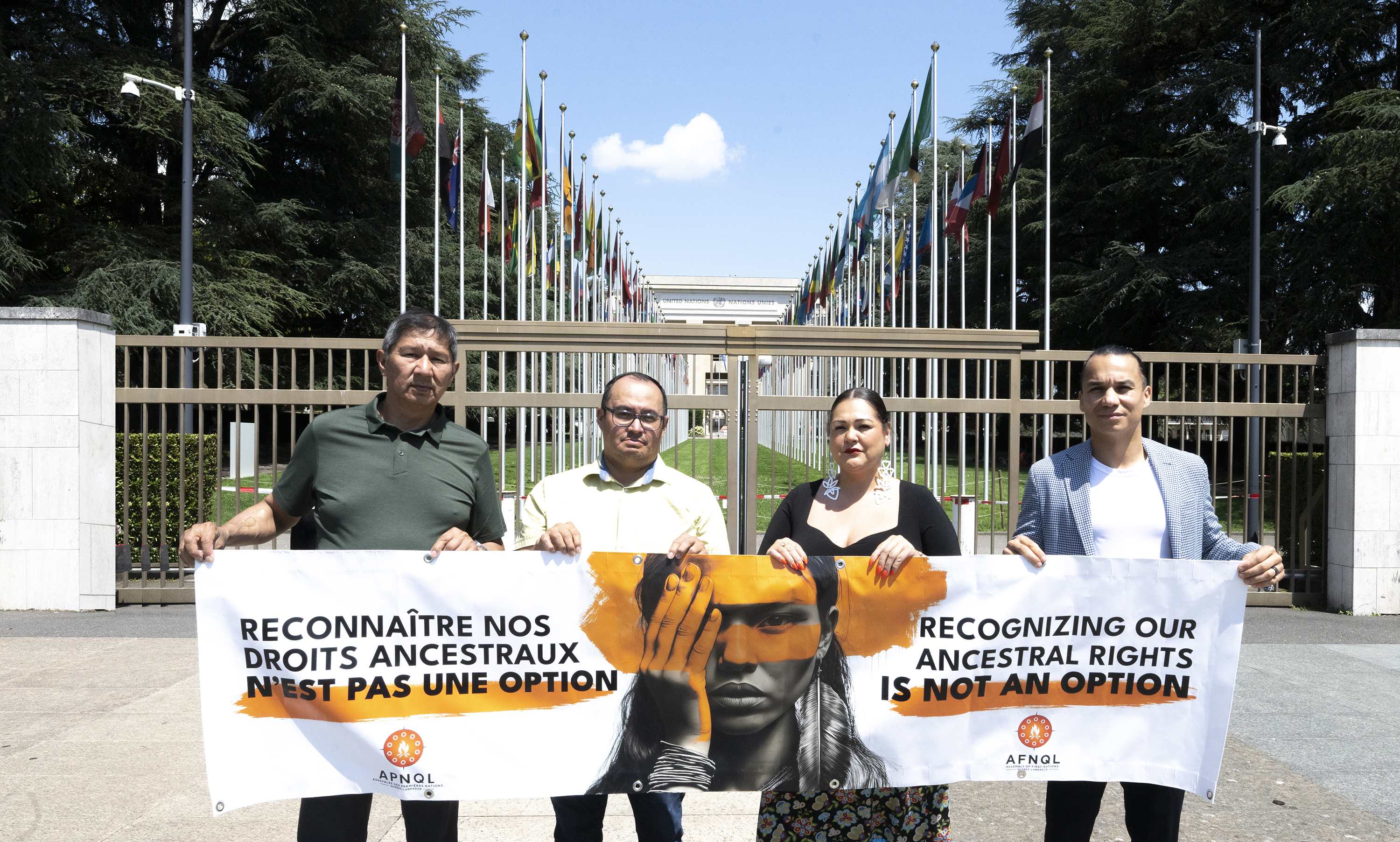
Image Caption
On July 18, the Assembly of First Nations Quebec-Labrador (AFNQL) concluded a major diplomatic and political mission at the 18th session of the United Nations Expert Mechanism on the Rights of Indigenous Peoples (EMRIP) held in Geneva from July 15 to 19, 2025.
During this week, AFNQL Chief Francis Verreault-Paul spoke on behalf of 43 First Nations governments in Quebec and Labrador in a major intervention, asking human rights bodies to examine cases of non-compliance with the rights of Indigenous peoples in Quebec.
"In Quebec, a reform of the forestry regime is underway, which directly affects our territories, our cultures, and our ways of life—without adequate consultation, without recognition from our governments, and without respect for our knowledge. This situation reveals a systemic problem. Human rights institutions must act as vigilant guardians by ensuring rigorous monitoring of public policies, supporting legislative reconciliation, and promoting recognition of Indigenous normative systems. This would contribute to greater legal stability and a more predictable business environment," he declared.
While reaffirming the fundamental rights of Indigenous peoples and calling for concrete action on the part of States and international institutions, the Chief of the AFNQL also issued a warning to the Canadian government regarding Bill C-5: "Major economic projects cannot be conceived without the free, prior and informed consent of Indigenous peoples. They must be carried out on a government to government basis, reflecting sincere and fair partnerships, based on co-decision and mutual respect."
Two other members of the AFNQL delegation also spoke at this international session. Lucien Wabanonik, Chief of the Anishinabe First Nation of Lac-Simon, denounced the Quebec government and its proposed reform of the forestry regime, which would reserve a third of public land for private interests, without any respect of First Nations' right to free, prior and informed consent. "It's not a bureaucratic omission: it's a methodical territorial dispossession. This project violates articles 26, 29 and 32 of the United Nations Declaration on the Rights of Indigenous Peoples, as well as Quebec's constitutional obligations. Not only has there been no real consultation, but this is a systemic violation of our rights, which is part of a long history of exploitation and exclusion," he said at the session on Indigenous peoples' rights to their traditional economies.
At the same session, Mélodie Jourdain-Michel, elected councillor for Innu Takuaikan Uashat mak Mani-utenam, also highlighted the challenges of recognizing Indigenous rights in Quebec, particularly with regard to the protection of salmon and caribou, which fall under the Innu Nation's food sovereignty. "I would like to remind you of an essential truth: the food sovereignty of Indigenous peoples is intimately linked to the health of our territories, the protection of ecosystems and the survival of the species that live there. For us, this sovereignty is based on an age-old balance with our environment. The caribou - Atiku - is not just a resource: it's sacred. It embodies our identity, our spirituality, our culture and our traditional economy. Despite clear court rulings, government action is slow and Quebec does the bare minimum," she proceeded to say.
Active and Committed Indigenous Diplomacy
This international mission also enabled the AFNQL to hold several high-level diplomatic meetings. Chief Verreault-Paul met with representatives of Indigenous peoples from around the world, including the Saami people and the Inuit Circumpolar Council, as well as officials such as Canada's Ambassador to the United Nations and the Chair of the Expert Mechanism on the Rights of Indigenous Peoples. Successful discussions were also held with various non-governmental organizations working for the rights of Indigenous peoples. The delegation has taken full advantage of these opportunities to build meaningful relationships, strengthen international solidarity and convey the concerns of the communities and nations that entrusted them with this mandate.
A Strong and United Political Voice
"Our sovereignty precedes that of the states. We can no longer be reduced to mere colonial structures. We are governments in our own right, with our own institutions, responsibilities and legal systems," said Chief Verreault-Paul.
This mission is part of the AFNQL's commitment to advancing international recognition of First Nations' rights and strengthening Nation to Nation relations, both in Canada and around the world.
About the AFNQL:
The Assembly of First Nations Quebec-Labrador is the regional political organization that brings together the 43 Chiefs of the First Nations of Quebec and Labrador. www.apnql.com
About the Expert Mechanism
The Expert Mechanism on the Rights of Indigenous Peoples is comprised of seven independent experts on the rights of Indigenous peoples. It provides the Human Rights Council with technical advice and guidance on the rights of Indigenous peoples. It assists Member States in fulfilling the objectives set out in the United Nations Declaration on the Rights of Indigenous Peoples. It conducts studies to promote and protect the rights of Indigenous peoples. Each year, the Expert Mechanism holds a five-day session in which representatives from states, Indigenous Peoples, Indigenous Peoples’ organizations, civil society, inter-governmental organizations and academia take part.